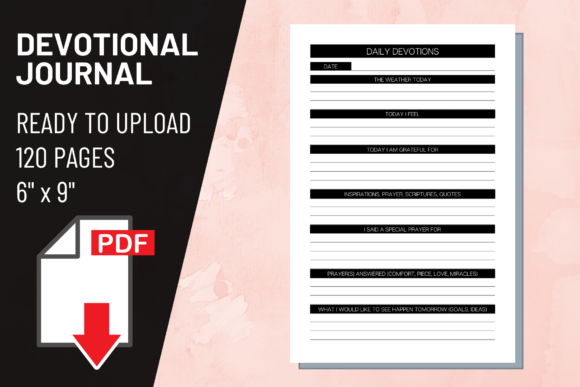
Creating a 6x9 KDP Interior Devotional Journal: A Complete Guide to Ready-to-Upload PDF Assets
The low-content and medium-content publishing market on Amazon Kindle Direct Publishing (KDP) has evolved significantly over the last few years. While simple lined notebooks once dominated the space, today’s successful publishers focus on providing genuine value through structured content. Among the most enduring and profitable niches in this category is the devotional journal. For creators looking to enter or expand within this market, understanding the technical and spiritual nuances of a high-quality KDP interior devotional journal is essential.
This guide explores the specific requirements, design philosophy, and practical application of a 6″ x 9″ devotional journal interior. Whether you are a seasoned self-publisher or a beginner seeking to create meaningful resources for faith-based communities, mastering the specifications of a print-ready, 300 DPI PDF file is the foundation of a professional product.
Understanding the Purpose of a Devotional Journal Interior
A devotional journal differs fundamentally from a standard diary or prayer log. It is a hybrid tool designed to facilitate spiritual growth through structured reflection. When we discuss a devotional journal KDP interior, we are referring to a pre-formatted template that guides the user through scripture reading, meditation, gratitude, and application.
In modern life, where digital distractions are constant, physical journals serve as an anchor. They provide a tactile space for mindfulness and spiritual discipline. For publishers, this means the interior layout must do more than hold ink; it must encourage a habit. A well-designed 120-page interior strikes the perfect balance between substantial content and portability, offering users a three-to-four-month journey without becoming physically cumbersome.
The Significance of the 6x9 Trim Size
While KDP offers numerous trim sizes, the 6″ x 9″ format remains the industry gold standard for devotional materials. Understanding why this size matters helps publishers make informed decisions about their assets.
- Portability: A 6x9 journal fits easily into a purse, backpack, or Bible cover. Devotionals are often used during commutes, travel, or quiet moments outside the home.
- Perceived Value: This size feels like a "real book" rather than a notepad. It carries enough weight to feel significant but remains intimate enough for personal writing.
- Cost Efficiency: Printing costs for 6x9 books are optimized on KDP, allowing for competitive pricing while maintaining healthy royalty margins on a 120-page count.
- Writing Space: The page real estate provides ample room for prompts and response lines without overwhelming the user with too much blank white space.
Technical Specifications: Why 300 DPI and No Bleed Matter
One of the most common reasons for KDP rejection or poor customer reviews regarding print quality is incorrect file preparation. When acquiring or creating a KDP interior devotional journal, adherence to strict technical standards is non-negotiable.
The Importance of 300 DPI Resolution
DPI stands for Dots Per Inch, and it measures the resolution of your PDF file. For digital screens, 72 or 96 DPI is sufficient. However, for print-on-demand paper products, 300 DPI is the mandatory minimum.
If a devotional journal contains intricate line art, floral borders, or elegant typography, anything less than 300 DPI will result in pixelation, blurriness, or jagged edges when printed. Customers expect crisp text and smooth graphics. A high-quality PDF file at 300 DPI ensures that every prompt, header, and decorative element appears sharp and professional. This technical fidelity directly correlates to perceived authority and trustworthiness—key components of E-E-A-T (Experience, Expertise, Authoritativeness, and Trustworthiness) in the eyes of both Amazon’s algorithm and human buyers.
Navigating "No Bleed" Layouts
The term "bleed" refers to printing that extends beyond the edge of the sheet before trimming. A no bleed interior means all content, including borders and background elements, stays within the safe margin zone.
For a 6x9 no-bleed devotional journal, the live area is typically smaller than the full trim size. Designers must maintain a safety margin (usually at least 0.375” on the outer edges and more on the gutter/binding side). Choosing a no-bleed package simplifies the upload process and reduces the risk of critical content being trimmed off during manufacturing. It is particularly advantageous for text-heavy devotionals where readability near the spine is paramount.
Anatomy of a High-Converting 120-Page Interior
A 120-page count is strategic. It creates a spine wide enough for legible text (approximately 0.27 inches for cream paper), which enhances shelf presence. But what should those 120 pages contain to maximize user engagement?
- Title and Ownership Page: A dedicated space for the user to personalize their journal increases emotional attachment to the product.
- Instructional Introduction: Never assume the user knows how to use the journal. Include a brief guide on how to approach the daily prompts.
- Structured Daily Pages: The core of the devotional journal KDP interior. Effective layouts include sections for Scripture Reference, Key Verse, Reflection/Study Notes, Prayer Requests, and Gratitude.
- Weekly or Monthly Reviews: Interspersing review pages breaks up the monotony and encourages long-term retention of spiritual insights.
- Back Matter Resources: Reading plans, bookmark trackers, or notes pages add extra value that distinguishes your book from generic competitors.
Common Misunderstandings About KDP Interiors
As the market matures, several misconceptions persist that can hinder new publishers. Clarifying these assumptions is vital for success.
Misconception: Any PDF Will Work
Many beginners believe they can simply export a Word document or a Canva design at default settings and upload it. Without verifying the 300 DPI setting and exact 6x9 dimensions, files are frequently flagged by KDP’s automated review system. Always validate your PDF using tools like Adobe Acrobat Pro or KDP’s Previewer before uploading.
Misconception: More Prompts Equal Better Value
Cramming five different questions onto a single 6x9 page often leads to cognitive overload. Users need whitespace to think. A superior KDP interior devotional journal prioritizes clarity over density. If the user feels rushed or cramped, they will abandon the journal. Effective design uses negative space as a functional element, inviting contemplation rather than demanding productivity.
Misconception: Digital and Print Files Are Interchangeable
A PDF optimized for tablet use (RGB color, hyperlinks, lower resolution) is unsuitable for KDP print. Print interiors require CMYK or grayscale color profiles and flattened layers to prevent font substitution issues. Ensuring your 300 DPI PDF is specifically formatted for print production prevents costly reprints and negative feedback.
Practical Relevance in Modern Faith Practices
The demand for structured devotional journals reflects a broader cultural shift toward intentional living. In an era of information overload, people are seeking curated experiences that help them process their beliefs.
For educators and ministry leaders, these journals serve as excellent curriculum companions. A 6x9 format allows students or congregation members to carry a unified resource that aligns with teaching series. For entrepreneurs in the faith-based niche, offering a complementary journal alongside courses or podcasts creates a cohesive ecosystem. The journal becomes a tangible extension of digital content, reinforcing learning through the physical act of writing.
Furthermore, the therapeutic aspect of journaling cannot be overstated. Mental health professionals increasingly recognize the benefits of expressive writing. A devotional journal that combines cognitive processing with spiritual grounding addresses the whole person, making it a relevant tool for wellness as well as worship.
Ensuring Quality Before Upload
When you acquire a ready-to-upload package, treat it as a raw material rather than a finished product. Even with a high-quality 300 DPI PDF, you should perform due diligence:
- Check Margins: Ensure no text falls within the gutter safety zone. For a 120-page book, a gutter margin of at least 0.375” to 0.5” is recommended.
- Verify Page Count: Confirm the PDF is exactly 120 pages. KDP requires the page count to match the metadata entered during setup.
- Test Print: Always order a proof copy. Colors and contrast look different on paper than on screen. Verify that gray tones are not too light to read and that lines are dark enough to write upon without smudging.
- Font Legibility: Ensure fonts are at least 10pt for body text and larger for headers. Accessibility matters; users of all ages should be able to engage with the content comfortably.
Building a Sustainable Publishing Strategy
Success with a devotional journal KDP interior extends beyond the initial upload. It requires understanding your audience's specific needs. Are they new believers needing foundational guidance? Are they busy parents needing quick, five-minute reflections? Are they studying a specific theological topic?
Tailoring your metadata, cover design, and even customizing the interior prompts to serve a specific sub-niche improves discoverability and conversion. A generic "Devotional Journal" faces immense competition. A "6x9 Morning Devotional Journal for Anxious Hearts" targets a specific intent and solves a defined problem.
Ultimately, the goal is to create a resource that serves. By combining technical excellence—crisp 300 DPI files, proper 6x9 formatting, and thoughtful no-bleed layouts—with empathetic, user-centered design, publishers can create devotional journals that truly enrich lives. This alignment of quality and purpose is what sustains a business in the ever-evolving landscape of self-publishing.