Surfing Log Book KDP Interior Template: A Practical Guide for Low-Content Publishers
The low-content publishing market on Amazon KDP has evolved significantly over the last few years. Gone are the days when simple lined notebooks could generate consistent passive income. Today, success relies on specificity, utility, and professional presentation. For creators targeting the niche of water sports enthusiasts, a dedicated Surfing Log Book KDP Interior Template offers a strategic entry point into a passionate community. This resource is designed not just as a blank journal, but as a functional tool that surfers actually need to track conditions, equipment, and personal progression.
Understanding the technical specifications and practical applications of this template is essential for publishers who want to move beyond generic designs. When you acquire a high-quality template package that includes editable source files and pre-tested PDFs, you are essentially acquiring a foundation for a product that solves a specific user problem. This article explores the nuances of utilizing these templates effectively, ensuring your final publication meets both platform standards and customer expectations.
The Functional Purpose of a Surf-Specific Log
To sell a logbook effectively, one must understand why a surfer uses it. Unlike a standard diary, a surfing log serves as a data collection instrument. Surfers use these books to identify patterns in swell direction, wind speed, tide charts, and board performance. A well-designed Surfing Log Book KDP Interior Template facilitates this data entry without friction.
The value proposition lies in the structured interior pages. Rather than forcing users to draw tables or remember what metrics to record, the template provides pre-formatted fields. This transforms a blank notebook into a specialized piece of gear. For the publisher, this means the design must prioritize writing space and legibility over excessive graphical elements. The best interiors balance aesthetic appeal with stark functionality, allowing users to quickly jot down notes while sitting in a car or on the beach, often with wet hands or in low light.
Analyzing the Technical Deliverables
When evaluating or preparing a template package for this niche, the file structure is just as important as the visual design. Professional-grade resources typically come with specific deliverables that streamline the publishing workflow. Understanding these components helps in assessing quality and usability.
- Editability via PowerPoint (PPTX): While Adobe InDesign is the industry standard for layout, many KDP creators prefer PowerPoint for its accessibility. An editable PPTX source file allows you to modify fonts, adjust table spacing, or rebrand the cover without needing expensive software. This flexibility is crucial if you plan to create a series of logbooks for different water sports using the same base layout.
- Pre-Tested PDF Interiors: Perhaps the most valuable component for new publishers is the inclusion of PDF files that have already been tested on KDP. Amazon’s printing specifications can be unforgiving regarding margins, bleed, and color profiles. Receiving three distinct PDF versions eliminates the trial-and-error phase of uploading, reducing the risk of rejection or printing errors.
- High-Resolution Assets: Print quality is non-negotiable. Low-resolution graphics result in pixelated lines and muddy text, leading to negative reviews. Ensuring the template utilizes vector graphics or 300 DPI raster images guarantees crisp output on Amazon’s standard paper stock.
Strategic Page Count Variations
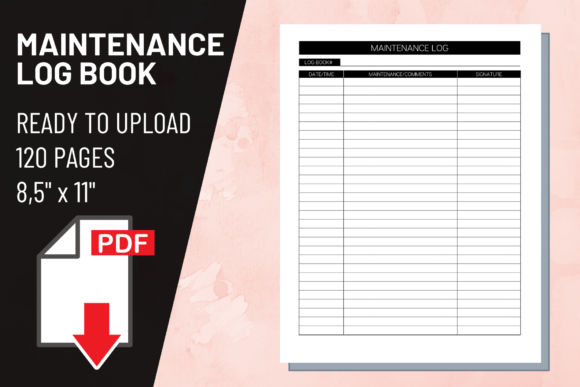
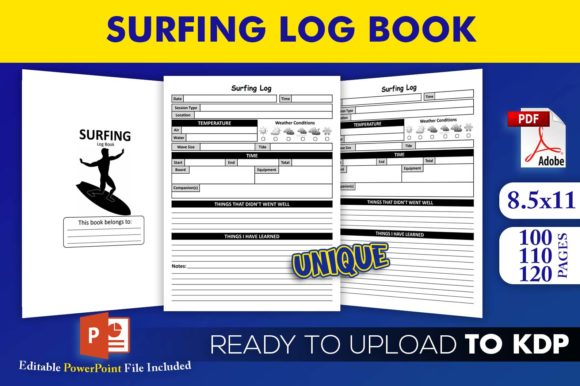
One size rarely fits all in the world of physical notebooks. The availability of different page counts—specifically 100, 110, and 120 pages—within a single template package addresses varying consumer needs and price points. This variation is a critical feature for sellers looking to test market demand.
A 100-page version is often ideal for casual surfers or those purchasing the book as a gift. It is lighter, more portable, and sits at a lower price point, making it an attractive impulse buy. Conversely, the 120-page option appeals to dedicated athletes and instructors who log sessions daily. The thicker spine allows for better visibility on a bookshelf and justifies a higher retail price, potentially increasing royalty margins per unit.
The 110-page variant serves as a middle ground, offering a balance between portability and longevity. Having all three options ready for upload allows publishers to A/B test which length resonates most with their specific audience segment without additional design work. This versatility maximizes the return on investment from a single template purchase.
Trim Size Considerations: Why 8.5 x 11?
The choice of an 8.5x11 inch trim size for a surfing logbook is deliberate and practical. While smaller sizes like 6x9 are popular for travel journals, the larger format offers distinct advantages for this specific niche. Surf logs often require wide columns for data entry, such as swell period, wind knots, and wave height ratings. A larger page width prevents cramping and allows for more detailed session notes.
Furthermore, the 8.5x11 size accommodates visual elements like tide charts or board outline diagrams without sacrificing writing space. From a production standpoint, this is also a standard paper size that ensures efficient printing and binding within Amazon’s network. For the end-user, the larger format feels substantial and professional, distinguishing it from cheap, pocket-sized notepads that might fall apart after exposure to sand and saltwater.
Evaluating Suitability for Your Publishing Portfolio
Before integrating a Surfing Log Book KDP Interior Template into your catalog, it is necessary to assess whether it aligns with your business goals and skill level. Not every template is suitable for every publisher.
For Beginners: If you are new to KDP, the pre-tested PDF files are invaluable. They remove the technical anxiety associated with formatting. However, ensure you understand basic metadata and keyword research before publishing. A perfect interior will not sell if it cannot be found in search results.
For Experienced Publishers: Look closely at the editable source file. Is the master slide set up correctly? Are the layers organized? Can you easily swap out the branding to match your existing portfolio? Experienced creators should view this template as a time-saver rather than a finished product. Customization is key to avoiding duplicate content penalties and building a recognizable brand identity.
For Niche Researchers: Verify that the interior fields match current surfing terminology. Trends change; for example, modern surfers might track "foil" sessions or "SUP" specifics differently than traditional shortboarding. A template that hasn't been updated in five years may contain obsolete metrics that alienate knowledgeable buyers.
Real-World Applications and User Scenarios
To market this product effectively, visualize how it fits into a customer's life. This informs your book description and advertising copy. Consider the following scenarios where this specific template adds value:
- Surf Schools and Instructors: Instructors often need students to track progress over a multi-week course. A standardized logbook based on this template can be sold as part of a lesson package, providing tangible value and a record of achievement.
- Competitive Surfers: Athletes training for contests use logs to analyze performance variables. The structured nature of the 120-page version supports rigorous data tracking required for competitive analysis.
- Travel and Retreats: Surf camps often provide welcome packs. Including a branded logbook enhances the guest experience and serves as a lasting souvenir. The editable PPTX file makes it easy for camp owners to add their logo before printing.
- Gift Givers: During the holiday season, friends and family of surfers often struggle to find relevant gifts. A high-quality, professionally formatted logbook is a safe yet thoughtful option that acknowledges the recipient's passion.
Limitations and Practical Expectations
While a Surfing Log Book KDP Interior Template provides a significant head start, it is not a magic solution. Publishers must remain aware of certain limitations. First, KDP’s standard black and white interior paper is uncoated. While great for writing, it is not waterproof. Despite the niche being water-adjacent, customers should be advised (perhaps in the book description) that the book itself is not marine-grade equipment.
Additionally, relying solely on the provided template without modification can lead to saturation issues. If hundreds of sellers use the exact same 110-page PDF without alteration, Amazon’s algorithm may suppress listings due to similarity. Always utilize the editable source file to tweak headers, fonts, or introductory pages. Even minor changes create a unique ASIN fingerprint and provide a fresher user experience.
Finally, understand that "tested on KDP" refers to technical compliance, not commercial viability. The files may print perfectly, but sales depend entirely on your ability to position the product. Use the template as a high-quality vessel for your marketing strategy, not as a replacement for it.
Making the Most of High-Resolution Interiors
The mention of high-resolution interiors implies a commitment to quality that discerning buyers appreciate. When reviewing the template, zoom in to 100% on the PDF. Check the line weights; they should be consistent and dark enough to reproduce clearly on standard offset presses. Verify that any icons or illustrations are sharp, not blurry or aliased.
If you are modifying the PPTX file, maintain this resolution standard. Avoid inserting low-quality web images. Stick to vector shapes or high-DPI assets. Remember that what looks acceptable on a backlit screen may appear faint or jagged in print. Respecting the integrity of the original high-resolution design ensures that the final physical product feels premium, encouraging positive reviews and repeat customers.
Ultimately, a Surfing Log Book KDP Interior Template represents a convergence of design efficiency and niche utility. By leveraging the included editable files, varied page counts, and pre-validated PDFs, publishers can create products that genuinely serve the surfing community. Success comes from treating the template as a professional starting point, customizing it to fit a specific brand voice, and understanding the practical realities of the end-user. Whether you are expanding an existing portfolio or launching your first niche-specific title, approaching this resource with a focus on utility and quality will yield the best long-term results.