Maximizing KDP Interiors with 100 Random Word Search 15x15 Puzzles
The landscape of self-publishing on Amazon KDP has evolved from simple text-based novels to a thriving marketplace for low-content and medium-content books. Among these, activity books remain a perennial bestseller, but the market is increasingly saturated. Success now depends less on mere presence and more on production efficiency, customization, and perceived value. For creators looking to streamline their workflow without sacrificing quality, utilizing pre-formatted assets like 100 Random Word Search 15x15 Puzzles offers a strategic advantage. These resources serve as foundational building blocks that allow publishers to focus on branding and niche targeting rather than the tedious mechanics of grid generation.
Technical Specifications and Print Readiness
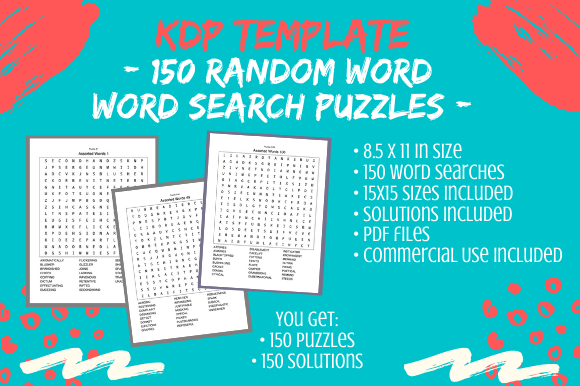
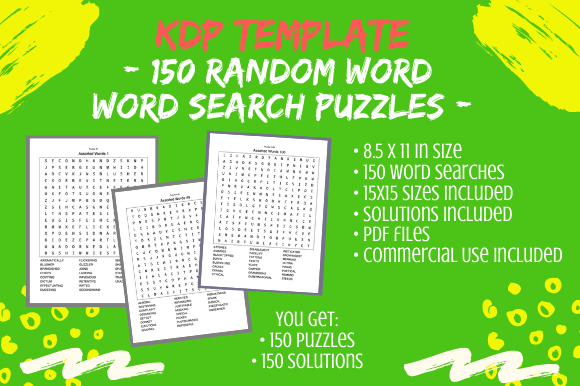
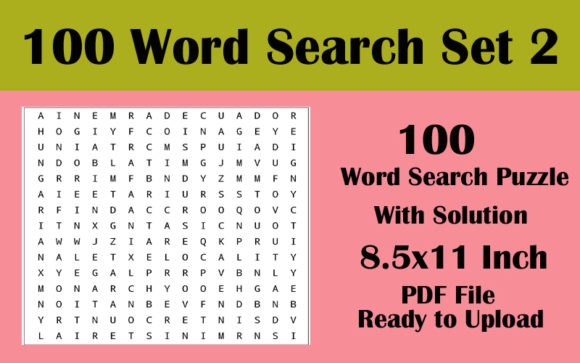
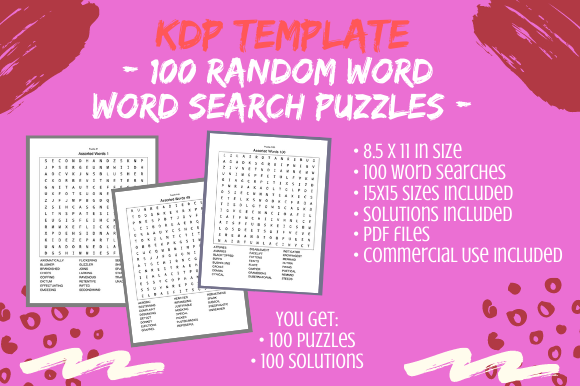
Understanding the physical constraints of print-on-demand publishing is essential before integrating any interior template into a project. The specific configuration of these puzzle sets addresses common formatting pitfalls that often lead to rejected manuscripts or poor customer reviews. The dimensions are set strictly to 8.5 x 11 inches, which is the industry standard for trade paperback activity books in the United States. More importantly, the files are designed with NO-bleed margins. This distinction is critical for new publishers; bleed requires images to extend beyond the trim line, whereas no-bleed keeps all content safely within a defined margin. By adhering to no-bleed specifications, these puzzles eliminate the risk of text being cropped during the trimming process at the printing facility.
The package typically includes two distinct PDF files: one containing the puzzle pages and another dedicated solely to solutions. Separating the answer key is a best practice in user experience design for activity books. It allows the end-user to engage with the puzzles without accidental spoilers while keeping the primary book uncluttered. With 100 individual puzzles spread across 100 pages, plus solution pages, the volume provides sufficient thickness to justify a competitive price point. A spine width of approximately 0.25 inches or more generally conveys higher value to potential buyers browsing thumbnails than thinner alternatives.
The Strategic Value of Randomized Content
While themed word searches have their place, random word lists offer unique versatility for portfolio diversification. Themed books target specific keywords but also face direct competition from every other publisher in that niche. Random puzzles, conversely, function as evergreen content. They appeal to a broader demographic, including seniors seeking cognitive maintenance, students needing vocabulary reinforcement, and casual solvers looking for variety. Because there is no overarching narrative or theme, these pages can be repurposed indefinitely across different book titles and covers without creating redundant inventory.
Furthermore, randomness reduces the cognitive load during the creation phase. When curating themed lists, creators must research appropriate terminology, verify spelling, and ensure cultural sensitivity. With pre-generated random sets, this validation step is largely bypassed, allowing for rapid deployment. This speed-to-market capability is vital when testing new cover designs or advertising strategies. If a particular cover concept performs well with random content, the publisher can later invest time in developing a specialized themed version with confidence that the underlying demand exists.
Customization Workflows and Asset Management
Acquiring a digital product is only the first step; transforming it into a proprietary asset is where long-term business value is generated. Users receive editable files, and while they can be used as-is, doing so limits differentiation. The recommendation to create a duplicate copy before editing cannot be overstated. Maintaining an untouched master file ensures that future projects have a clean baseline, preventing cumulative errors or formatting drift that occurs when repeatedly saving over the same document.
Editing capabilities depend on the tools available, but modern online PDF converters have lowered the barrier to entry significantly. Publishers can extract specific pages, reorder sequences, or delete puzzles that do not fit a new layout. However, true uniqueness comes from layering additional elements. Consider the following modification strategies:
- Visual Enhancement: Adding clip art, borders, or background textures transforms a sterile grid into a branded experience. Even simple geometric patterns in the margins can increase perceived production value.
- Content Interspersing: Mixing word searches with other activities prevents solver fatigue. Alternating puzzle pages with coloring sheets, inspirational quotes, or trivia facts creates a dynamic rhythm that encourages longer engagement sessions.
- Title and Header Customization: Changing generic headers to match the book’s specific branding reinforces identity. Consistent typography and voice throughout the interior signal professionalism to the buyer.
- Solution Page Formatting: Solutions do not need to mirror the puzzle layout exactly. Reformatting them into smaller grids per page can reduce the total page count of the answer key section, optimizing paper usage.
Educational and Therapeutic Applications
Beyond commercial publishing, these 15x15 grids serve functional roles in educational and therapeutic settings. Educators and tutors frequently require supplemental materials that do not align perfectly with commercial textbook releases. Having a bank of 100 editable puzzles allows teachers to compile custom workbooks tailored to specific reading levels or vocabulary units. Since the words are random, they act as neutral scaffolding; educators can overlay specific learning objectives through accompanying worksheets or discussion prompts without the puzzle itself dictating the lesson plan.
In therapeutic contexts, particularly for occupational therapy or geriatric care, the 15x15 format represents a moderate difficulty level. It is challenging enough to provide cognitive stimulation but not so dense as to cause frustration, which is a risk with larger 20x20 or 25x25 grids. Professionals can select specific puzzles from the set based on font size and word density to match client capabilities. The ability to edit the PDF means therapists can also enlarge specific sections or adjust contrast for visually impaired clients, making the resource adaptable to individual accommodation needs.
Navigating Licensing and Originality
A common concern among KDP publishers involves the originality of pre-made interiors. Amazon’s algorithms prioritize unique content, and duplicate interiors can sometimes trigger quality warnings. This makes the "mix and match" approach not just a creative suggestion but a compliance necessity. Using the 100 Random Word Search 15x15 Puzzles as a standalone product without modification carries inherent risks if thousands of other users have done the same. However, when combined with original graphics, unique introductions, proprietary branding, and supplementary content, the resulting book becomes a distinct intellectual property.
Publishers should view these templates as raw ingredients rather than finished meals. Just as two restaurants can use the same flour and sugar to create entirely different desserts, two publishers can use the same puzzle base to create vastly different products. One might create a large-print relaxation book for retirees with floral accents and mindfulness quotes, while another might produce a travel activity binder for teenagers with bold graphics and journaling prompts. The underlying grid data may be identical, but the user experience and market positioning are unique.
Optimizing for Long-Term Portfolio Growth
Efficiency in low-content publishing is about leverage. Creating 100 high-quality word search grids from scratch involves generating word lists, running algorithmic placement, verifying solvability, formatting margins, and creating solution keys. This process can take dozens of hours. By utilizing a pre-verified set, that time investment is redirected toward market research, cover design, keyword optimization, and advertising. Over time, this shift in resource allocation compounds. Publishers who spend 90% of their time on marketing and 10% on assembly typically outperform those who invert that ratio.
Additionally, having a standardized interior format simplifies series expansion. Once a successful template style is established using these random puzzles, replicating the aesthetic for future volumes becomes systematic. Whether expanding into themed collections, holiday specials, or language learning variants, maintaining consistent interior architecture builds brand recognition. Readers who enjoyed the layout and difficulty level of the first volume are more likely to purchase subsequent entries if the user experience remains familiar.
Ultimately, the utility of 100 Random Word Search 15x15 Puzzles lies in their flexibility. They bridge the gap between technical specification and creative application, providing a compliant, print-ready foundation that supports both rapid prototyping and sophisticated product development. For professionals, educators, and hobbyists alike, they represent a practical tool for converting ideas into tangible, marketable assets while navigating the complexities of modern digital publishing.