Workout Log Book - KDP Interior: Streamlining Low-Content Publishing with Editable Source Files
The low-content publishing landscape has shifted dramatically in recent years, moving away from generic, mass-produced templates toward specialized, high-utility tools that serve specific niches. For creators and entrepreneurs operating within the Amazon KDP ecosystem, the Workout Log Book - KDP Interior represents more than just a collection of blank tables; it is a strategic asset designed to bridge the gap between digital convenience and physical accountability. As health consciousness remains a dominant cultural force, the demand for tangible tracking methods has not diminished despite the proliferation of fitness apps. Instead, it has evolved. Modern consumers seek hybrid solutions that offer the tactile satisfaction of pen-on-paper journaling combined with professional-grade design and usability.
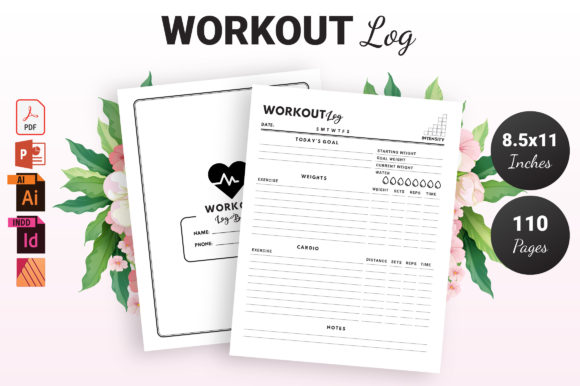
This specific interior template addresses a critical pain point for self-publishers: the technical barrier to entry. By providing instant downloads in PDF, PowerPoint, Illustrator, and InDesign formats, this resource eliminates the steep learning curve associated with book formatting. It allows marketers, freelancers, and business owners to bypass weeks of design work and focus immediately on market research, keyword optimization, and brand building. The inclusion of editable source files transforms what would typically be a static product into a flexible foundation for a broader publishing portfolio.
The Resurgence of Analog Tracking in a Digital Fitness Era
To understand the commercial viability of this interior, one must first understand the current behavioral trends in fitness and wellness. While wearable technology and smartphone applications dominate the data collection space, they often contribute to cognitive overload. Users are increasingly experiencing "app fatigue," where the friction of unlocking a phone, navigating menus, and dealing with notifications detracts from the mindfulness of the workout itself. A physical log book offers a distraction-free zone. It creates a ritualistic boundary between exercise and the digital noise of daily life.
For KDP publishers, this trend signals an opportunity to position products not as competitors to technology, but as complementary tools. The 8.5″ x 11″ dimension specified in this template is significant here. Unlike smaller pocket journals, this larger format accommodates comprehensive tracking without cramping handwriting. It allows for wider columns, ample notes sections, and space for progress charts or body measurement diagrams. This size aligns with modern expectations for usability; readers want a log book that functions as a legitimate training manual rather than a novelty item. When creating content for this demographic, successful publishers emphasize clarity, whitespace, and functional layout over decorative excess.
Technical Specifications as a Competitive Advantage
In the saturated KDP marketplace, quality is the primary differentiator. Many low-content books fail because of poor margins, blurry text, or inconsistent alignment. This Workout Log Book - KDP Interior is engineered to meet professional print standards out of the box. The specification of 110 pages with no bleed is a deliberate choice that balances production cost with perceived value. No-bleed interiors are generally safer for new publishers, as they reduce the risk of trimming errors during the printing process while maintaining a clean, structured aesthetic that suits data-heavy layouts.
The 110-page count is equally strategic. It provides enough volume to track several months of consistent training, which encourages user retention and positive reviews regarding longevity, yet it remains lightweight enough to keep printing costs low. This margin protection is essential for profitability in competitive sub-niches. Furthermore, the high-quality print-ready PDF ensures that vectors remain crisp and text remains sharp at any zoom level, preventing the pixelation issues that plague amateur submissions. When a customer receives a professionally formatted book, trust in the brand increases, leading to higher conversion rates on future titles.
Leveraging Multi-Format Source Files for Customization
The true value proposition of this asset lies in its versatility through multiple file formats. Most KDP interiors are sold as locked PDFs, forcing creators to accept the design exactly as is. However, access to PPTX, AI, and INDD files changes the workflow entirely. This multi-format approach caters to professionals with varying skill sets and software subscriptions.
- Adobe InDesign (INDD): The industry standard for book layout. Professionals can adjust master pages, modify paragraph styles, and reflow content across all 110 pages instantly. This is ideal for those looking to create a cohesive series of fitness journals with consistent branding.
- Adobe Illustrator (AI): Best for vector manipulation. If you wish to redesign the header graphics, alter iconography, or adjust table line weights without losing resolution, the AI file provides granular control over visual elements.
- PowerPoint (PPTX): Perhaps the most underrated format for non-designers. PowerPoint is accessible, familiar, and surprisingly capable for simple layout adjustments. Marketers and educators who do not own Adobe Creative Cloud can still customize headers, add logos, or tweak column widths without learning complex design software.
- Print-Ready PDF: For those who want to launch immediately without modification, the pre-formatted PDF serves as a turnkey solution. Simply upload to KDP, set your metadata, and publish.
This flexibility supports a sustainable business model. Rather than purchasing a new interior for every niche variation, a creator can adapt this single Workout Log Book - KDP Interior into a yoga tracker, a physical therapy log, a nutrition diary, or a strength training journal simply by editing the source files. This reduces overhead and accelerates time-to-market.
Adapting to Niche Market Demands
Generic workout logs face stiff competition. Success in KDP now requires specificity. The editable nature of this template allows publishers to pivot quickly toward emerging micro-trends. For example, the rise of functional fitness and mobility training for adults over 40 requires different tracking metrics than bodybuilding for young adults. With the INDD or PPTX files, you can rename columns from "Reps/Weight" to "Duration/Pain Level" or add specific warm-up and cool-down sections tailored to rehabilitation protocols.
Similarly, corporate wellness programs and personal trainers often seek branded materials. A freelancer or consultant could use this template to create custom-branded log books for clients, adding company logos or specific coaching cues directly into the interior. This B2B application expands the potential revenue stream beyond direct Amazon sales. The ability to deliver a customized, professional-grade physical product enhances service offerings for fitness professionals and wellness coaches who understand that client adherence improves when tracking is made easy and personalized.
Practical Workflow Integration for Publishers
Integrating this interior into a publishing workflow requires a mindset shift from "uploading files" to "product development." Because the dimensions are fixed at 8.5″ x 11″ with no bleed, users should configure their KDP project settings before opening the source files to ensure compatibility. When customizing in PowerPoint or InDesign, maintain safe zones of at least 0.375 inches on the binding side to prevent content from being lost in the gutter. The pre-built template respects these margins, but any significant customization should be double-checked against KDP’s current submission guidelines.
Creators should also consider the cover design in relation to this interior. Since the interior is clean and data-focused, the cover should communicate utility and durability. Matte finishes often perform better for workout journals than glossy, as they resist fingerprints and feel more substantial in a gym environment. The interior’s professional layout sets a baseline expectation; the cover must fulfill that promise. Using the provided source files, publishers can extract design elements or color palettes from the interior to ensure visual consistency between the cover and the content, creating a unified brand experience that stands out in search results.
Future-Proofing Your Low-Content Portfolio
The market for fitness journals will continue to mature. As AI-generated content floods the platform, human-curated, thoughtfully designed interiors will gain premium status. Investing in editable, high-specification assets like this Workout Log Book - KDP Interior is a defense against commoditization. It signals to both the algorithm and the consumer that the product was created with intention and technical competence.
Moreover, owning the source files protects against platform dependency. Should KDP policies change or printing specifications update, having the original INDD or AI files means you can adjust your inventory without repurchasing or redesigning from scratch. This ownership is crucial for long-term asset management. Whether you are a seasoned publisher scaling your catalog or a new entrepreneur testing the waters of passive income, starting with a robust, customizable foundation reduces risk and increases the probability of building a sustainable publishing business. The intersection of health trends, analog preference, and professional design tools creates a fertile ground for those willing to treat low-content publishing as a serious creative and commercial endeavor.