Evaluating the KDP Horse Health Record Log Book: Format, Features, and Practical Fit
Maintaining accurate health records for equines is a critical aspect of responsible ownership, yet finding a system that balances portability with comprehensive data tracking remains a challenge for many equestrians. The KDP Horse Health Record Log Book presents a specific solution within the print-on-demand ecosystem, designed to bridge the gap between digital complexity and generic notebook disorganization. For adults managing their own horses or overseeing small barns, understanding the distinct characteristics of this 6x9 inch, 100-page resource is essential before committing to it as a primary record-keeping tool.
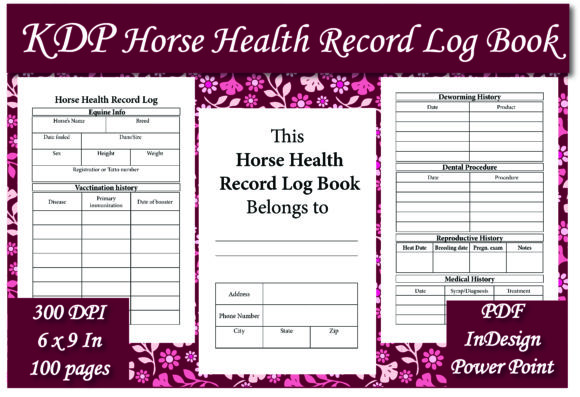
This log book distinguishes itself through its hybrid nature. Unlike standard stationery store notebooks that offer only lined paper, or expensive pre-printed veterinary journals that cannot be modified, this product provides a structured framework specifically tailored to equine medicine. It includes dedicated sections for vaccination history, deworming schedules, dental procedures, reproductive history, and general medical history. Furthermore, the inclusion of editable source files (InDesign and PowerPoint) alongside a ready-to-upload PDF creates a unique value proposition for users who may need to customize the layout before printing or publishing.
Structural Breakdown and Content Utility
When evaluating any health record system, the utility of the interior layout determines its long-term viability. The KDP Horse Health Record Log Book is organized to mirror the workflow of routine equine care rather than chronological journaling. This distinction matters significantly when comparing it to blank journals or generic planners.
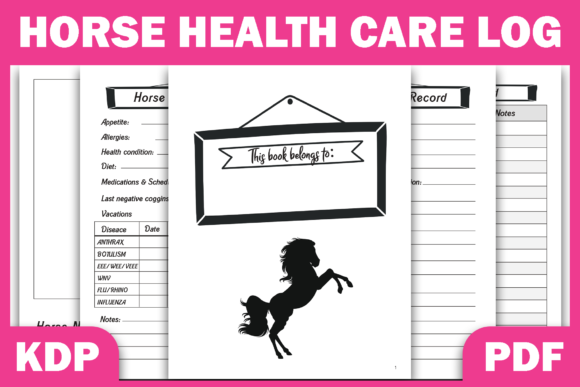
- Ownership and Contact Data: The volume begins with a clear "This Horse Health Record Log Book Belongs To" page, including fields for address, phone number, city, state, and zip code. In a busy barn environment where books are frequently misplaced or shared among staff, this immediate identification reduces loss risk.
- Equine Information Profile: A dedicated profile section allows for baseline data entry. This serves as a quick reference for veterinarians or farriers who need immediate access to breed, age, color, markings, and microchip numbers without flipping through months of daily logs.
- Preventative Care Tracking: The separation of vaccination and deworming histories into distinct tables prevents data clutter. Many alternative formats combine these into single chronological lists, making it difficult to audit compliance at a glance. This log book’s segmented approach supports faster verification during health inspections or sales evaluations.
- Specialized Medical Sections: The inclusion of dental procedure and reproductive history logs addresses needs often overlooked in basic trackers. For broodmare managers or owners of senior horses requiring frequent dental work, these dedicated pages eliminate the need for loose inserts or supplementary notebooks.
The 100-page count in a 6x9 inch trim size offers a practical balance. It is compact enough to fit in a grooming tote or saddlebag pocket, yet substantial enough to cover multiple years of preventative care or the lifetime health summary of a single horse. Users comparing this to larger 8.5x11 clipboards should note that while this format sacrifices writing surface area, it gains significant portability and durability in field conditions.
Customization Capabilities via Editable Files
A defining feature of this specific package is the provision of both InDesign and PowerPoint source files. Most KDP log books are sold strictly as finished PDFs, locking the user into the designer’s original vision. This limitation can be problematic for owners with non-standard requirements, such as those managing horses with chronic conditions like Cushing’s disease or metabolic syndrome that require specialized tracking columns not found in commercial templates.
The availability of editable files shifts this product from a static commodity to a flexible template. Users proficient in Adobe InDesign can make professional-grade typographic and layout adjustments. Those without design software can utilize PowerPoint as a more accessible, albeit less precise, editing environment. This flexibility allows for:
- Adding farm logos or branding for professional trainers and boarding facilities.
- Modifying column headers to match specific regional veterinary protocols.
- Removing irrelevant sections (such as reproductive history for geldings) to maximize page efficiency.
- Translating content for bilingual barn environments.
However, this capability introduces a tradeoff. Users must possess either the software or the willingness to learn basic file manipulation. For individuals seeking a purely "print-and-go" solution without technical engagement, the included PDF serves as the fallback option. When comparing alternatives, buyers should assess whether they actually need customization or if they are paying for a feature they will never utilize.
Comparing Print-On-Demand vs. Traditional Publishing
To make an informed decision, it is necessary to contextualize this KDP Horse Health Record Log Book against other market categories. Traditional bookstore equine journals often feature higher quality binding and thicker paper but come at a premium price point and fixed layouts. They rarely offer digital source files. Conversely, digital apps provide searchability and cloud backup but lack the tactile reliability needed in dusty, wet, or low-connectivity barn environments.
This KDP option occupies a middle ground. As a print-on-demand product, the paper quality is typically standard 55# or 60# white stock. While adequate for ballpoint pen and pencil, users preferring gel pens or markers may experience bleed-through, a common limitation in this category compared to premium stationery. However, the cost-per-unit is generally lower than specialty equestrian retailers, making it feasible to maintain individual books for each horse in a multi-animal herd without significant financial strain.
Furthermore, the KDP model ensures availability. Traditional niche publishers frequently let titles go out of print or update editions sporadically. A print-on-demand template remains perpetually available, allowing users to reorder identical copies year after year. This consistency is valuable for owners who prefer uniformity across their filing system over decades.
Decision Factors and Best-Fit Scenarios
Selecting the right record-keeping tool depends heavily on specific use cases. The KDP Horse Health Record Log Book is particularly well-suited for:
- Private Owners and Small Barns: Individuals managing 1–10 horses who need a physical backup to digital records or a primary system that travels easily between home and show grounds.
- Breeding Operations: The dedicated reproductive history section makes this viable for tracking estrus cycles, breeding dates, and foaling records, provided the user customizes the template if their data points differ from the standard layout.
- Rescue Organizations: The ability to edit the file allows rescues to add intake assessment forms or behavioral notes directly into the health log, creating a unified transition document for adopters.
- 4-H and Youth Equestrians: The structured format helps young riders learn proper record-keeping habits without being overwhelmed by open-ended journaling.
Conversely, this format may present limitations for certain users. Large-scale commercial breeding farms or veterinary clinics typically require integrated database systems rather than individual physical logs. Additionally, users who prioritize archival-quality paper or leather-bound aesthetics for show-ring presentation may find the standard KDP production values insufficient. Those entirely dependent on mobile devices for data entry might also find a physical-only system redundant, unless used specifically as an emergency offline backup.
Evaluating the Tradeoffs
Every record-keeping system involves compromise. The primary tradeoff with this KDP Horse Health Record Log Book is the exchange of premium materials for accessibility and customizability. You gain a highly portable, affordable, and modifiable tool, but you sacrifice the luxury feel and potentially the longevity of acid-free archival paper. For working documents intended to be referenced actively in a barn aisle rather than stored in a library, this tradeoff is often acceptable.
Another consideration is the learning curve associated with the editable files. While PowerPoint lowers the barrier to entry, it is not a native publishing tool. Users modifying the file in PowerPoint should verify margins and bleed settings carefully before uploading to avoid printing errors. Those uncomfortable with this technical responsibility should rely solely on the pre-formatted PDF, accepting the fixed layout as the cost of convenience.
Ultimately, the value of this resource lies in its alignment with practical equine management needs. It avoids the vagueness of blank notebooks and the rigidity of mass-market journals. By offering structured medical tracking alongside modification capabilities, it serves as a functional middle path for equestrians who view record-keeping as an active component of horse health management rather than a passive administrative task. Evaluating your specific documentation volume, environmental conditions, and customization needs will determine whether this specific configuration offers the optimal balance for your situation.