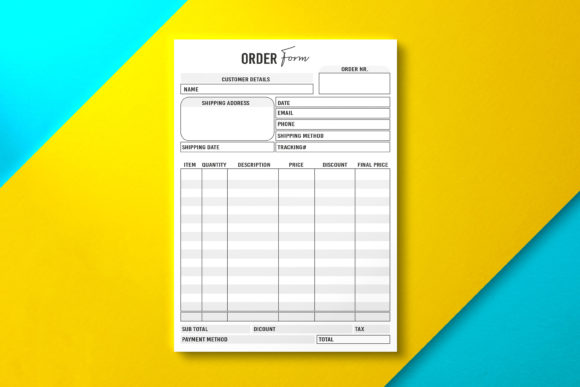
Order Form, PDF Template: A Practical Guide to Sizes and KDP Readiness
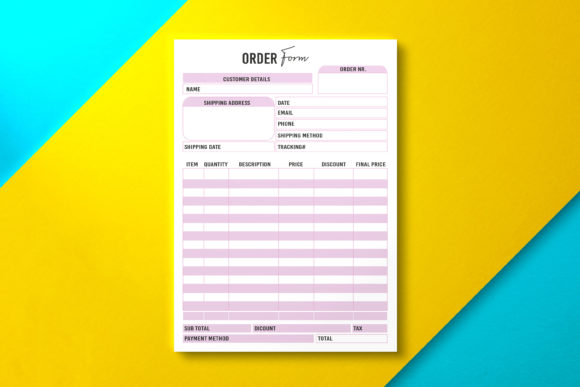
In the world of self-publishing, small business management, and independent creation, organization is often the difference between a hobby and a professional enterprise. One of the most versatile tools available to creators and entrepreneurs today is the Order Form, PDF Template. Unlike generic word processor documents that can lose formatting when shared across different devices, a dedicated PDF template ensures consistency, professionalism, and ease of use. Whether you are managing client commissions, tracking inventory for a handmade business, or preparing a low-content book for Amazon KDP, understanding the nuances of these templates is essential.
This guide explores the practical applications, specific size variations, and technical considerations for using order form templates effectively. We will move beyond simple definitions to discuss real-world utility, helping you select the right format for your specific project needs.
The Functional Value of Standardized PDF Templates
Why choose a pre-formatted Order Form, PDF Template over creating a document from scratch? The answer lies in workflow efficiency and platform compatibility. When dealing with print-on-demand services like Amazon KDP or sharing digital files with clients, margins, bleed areas, and safe zones are non-negotiable. A professionally designed template has these technical specifications baked in, reducing the risk of rejection during upload or printing errors during fulfillment.
Furthermore, PDF templates preserve the visual integrity of your layout. Fonts remain embedded, spacing stays consistent, and interactive elements (if applicable) function as intended. For business owners, this reliability projects competence. For authors publishing logbooks or order journals, it ensures that every page aligns perfectly with the binding requirements of the chosen trim size.
Core Use Cases Across Industries
The versatility of these templates extends far beyond simple retail transactions. Understanding where they fit into various workflows helps maximize their value:
- Self-Publishers and KDP Authors: Creating interior manuscripts for order journals, invoice logs, and business record books.
- Etsy Sellers and Crafters: Providing customers with standardized order sheets for custom commissions or wholesale inquiries.
- Service Professionals: Generating intake forms for salons, repair shops, or consulting services where physical signatures or written notes are required.
- Event Planners: Managing vendor orders, catering requests, and equipment rentals in a uniform format.
Navigating Trim Sizes: Choosing the Right Dimensions
One of the most critical decisions when selecting an Order Form, PDF Template is the trim size. The dimensions dictate not only the aesthetic appeal but also the functional capacity of the form. Below is a detailed breakdown of common sizes and their ideal applications.
Standard Letter Size (8.5x11 in)
The 8.5x11 inch format is the industry standard in North America. It offers maximum writing space and is compatible with virtually all home and office printers. This size is ideal for:
- Detailed invoices requiring extensive line items.
- Internal business records that will be filed in standard binders.
- KDP journals intended for desk use rather than portability.
When utilizing the 1-file Order Form 8.5×11 in, users benefit from the familiarity of the layout, which reduces cognitive load for clients filling out information.
A4 International Standard (8.3×11.7 in)
For creators targeting a global audience or operating outside North America, the 8.3×11.7 inch (A4) size is mandatory. Slightly narrower and taller than US Letter, this size is the default for international business correspondence. Selecting the 1-file Order Form 8.3×11.7 in ensures that your documents print correctly on standard paper stocks in Europe, Asia, and Australia without scaling issues.
Compact and Portable Options
Not every order form requires a full sheet of paper. Smaller trim sizes offer portability and a specialized feel, often associated with premium notebooks or field guides.
6x9 in: Often considered the "goldilocks" size for trade paperbacks, the 6x9 inch format balances portability with adequate writing space. The 1-file Order Form 6×9 in is perfect for sales representatives who need to take orders on the go, or for KDP authors creating pocket-sized business logs.
5.5x8.5 in: Half the size of a standard letter sheet, this dimension creates a digest-like appearance. It is excellent for quick receipt pads, appointment cards, or minimalist order trackers. The 1-file Order Form 5.5×8.5 in maximizes paper economy if you are printing multiple forms per sheet at home.
5.8x8.3 in: This corresponds to the A5 international standard. Like its 6x9 counterpart, it is highly portable but adheres to ISO paper standards. The 1-file Order Form 5.8×8.3 in is the preferred choice for European marketplaces or travelers needing a compact logging system.
7x10 in: Sitting between the standard letter and the 6x9, this size offers a unique, slightly more generous feel than a typical paperback without being cumbersome. It provides extra margin space for binding while maintaining a handheld profile.
Single Files vs. Manuscript Compilations for KDP
When sourcing or creating these templates, it is vital to distinguish between single-page assets and full manuscript files. Your end goal determines which product file type you require.
Individual Template Files
Products labeled as 1-file Order Form (in any of the sizes mentioned above) are typically single-page PDFs. These are designed for:
- Digital Distribution: Emailing a blank form to a client to fill out and return.
- Home Printing: Printing a few copies as needed for immediate use.
- Custom Compilation: Importing the single page into design software to create your own unique book layout.
Ready-to-Upload Manuscripts
For self-publishers, assembling 110 pages individually is tedious and prone to error. Pre-compiled manuscripts such as the 110 pages Order Form 7×10 in, 110 pages Order Form 6×9 in, or 110 pages Order Form 8.5×11 in solve this problem entirely. These files are formatted specifically for Amazon KDP upload.
Key Features of Ready KDP Upload Files:
- Correct Page Count: 110 pages is a strategic sweet spot. It is thick enough to justify a spine text (usually requiring at least 79-100 pages depending on paper type) but thin enough to keep printing costs low and royalties high.
- Bleed and Margins: These compilations already account for the gutter margin (the inner space lost to binding). You do not need to adjust settings; simply upload the PDF.
- Consistency: Every page is identical, ensuring a uniform user experience throughout the journal.
Practical Considerations and Limitations
While Order Form, PDF Template products are incredibly useful, they are not without limitations. Being aware of these constraints helps manage expectations and avoid frustration.
Editability vs. Stability
Most PDF templates are designed to be stable, not editable. If you need to change the logo, adjust the fields, or alter the branding, a standard flattened PDF will not suffice. In such cases, ensure you are purchasing a template that includes an editable source file (such as Canva, InDesign, or Word) alongside the PDF. If you only have the PDF, treat it as a final output for printing or digital signing, not a draft to be modified.
KDP Content Guidelines
Amazon KDP has strict guidelines regarding duplicate content. If you purchase a mass-market 110 pages Order Form template and upload it exactly as-is, there is a possibility it may be flagged if hundreds of other sellers have used the identical interior. To mitigate this risk, experienced publishers use these templates as a base. They might add a custom cover, insert a unique introduction page, or alternate between two different form layouts to create a distinct product.
Print Quality and Color
Remember that most order form journals on KDP are printed in black and white on standard cream or white paper. Avoid templates with heavy gray backgrounds or colored graphics unless you intend to pay for premium color printing, which significantly increases the cost per unit. High-contrast, line-art style templates yield the best results for functional business books.
Evaluating Suitability for Your Project
Before downloading or purchasing, run through this quick evaluation checklist to ensure the Order Form, PDF Template meets your needs:
- Purpose: Is this for digital use, home printing, or commercial publishing?
- Audience Location: Do you need US Letter (8.5x11) or International A4 (8.3x11.7)?
- Portability: Does the user need to carry this in a bag (choose 6x9 or 5.8x8.3) or use it at a desk (choose 8.5x11)?
- Volume: Do you need a single sheet or a 110-page compiled manuscript?
- Customization: Does the template allow for the level of personalization your brand requires?
By carefully matching the template specifications to your operational requirements, you transform a simple document into a powerful asset. Whether streamlining client intake or building a passive income stream through KDP, the right Order Form, PDF Template provides the structural foundation necessary for success. Focus on utility, respect the technical parameters of your chosen platform, and prioritize the end-user experience to get the most value from these versatile resources.