Facebook Tracker KDP Template: A Practical Guide for No-Bleed Publishing
In the evolving landscape of self-publishing, niche-specific low-content books have become a vital tool for creators looking to solve specific problems for targeted audiences. Among these specialized resources, the Facebook Tracker KDP Template stands out as a functional asset for social media managers, digital marketers, and small business owners who prefer analog organization amidst a digital workflow. This template is specifically engineered for Amazon Kindle Direct Publishing (KDP), offering a streamlined path to creating a physical tracking journal without the technical complexities often associated with book formatting.
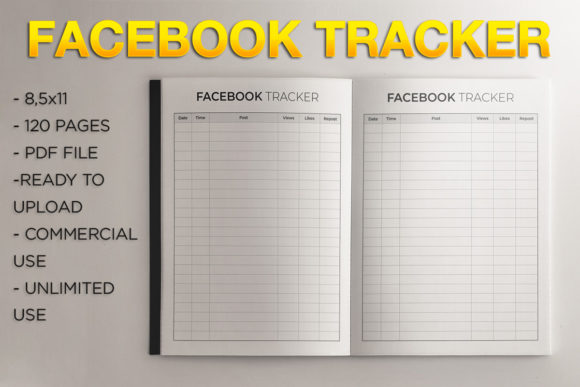
Understanding the utility of this template requires looking beyond the surface level of "low content" publishing. It is not merely a collection of blank pages; it is a structured system designed to capture metrics, ad spend, engagement rates, and campaign notes in a standardized 8.5″ x 11″ format. For publishers and end-users alike, the value lies in the intersection of precise technical specifications and practical daily application. This guide explores the nuances of utilizing the Facebook Tracker Template No Bleed Design, ensuring that both the creation process and the final user experience are optimized for success.
The Strategic Value of Analog Tracking in Digital Marketing
While analytics dashboards provide real-time data, many professionals find that the act of physically recording metrics enhances retention and strategic thinking. The Facebook Tracker KDP Template facilitates this cognitive bridge. By transferring data from a screen to paper, marketers can often spot trends, anomalies, or correlations that get lost in the noise of automated reporting. This template serves as the physical infrastructure for that analytical process.
For KDP creators, this represents an opportunity to serve a professional demographic that values tangible tools. Unlike generic planners, a Facebook tracker addresses specific pain points: tracking Return on Ad Spend (ROAS), monitoring creative fatigue, and logging audience insights over time. The 120-page count included in this template provides sufficient volume for quarterly tracking or long-term campaign monitoring, making it a substantial resource rather than a disposable notebook. When evaluating this template for your publishing portfolio or personal use, consider it as a productivity instrument designed to complement, not replace, digital analytics platforms.
Technical Specifications: Understanding the No-Bleed Advantage
One of the most critical aspects of this product is the No Bleed Design. For those new to KDP or printing terminology, "bleed" refers to artwork or background colors that extend beyond the trim edge of the page. While bleed designs can look immersive, they introduce significant risks during the printing process, including unintended white borders if the cut is slightly off, or crucial content being trimmed away.
The Facebook Tracker Template No Bleed Design eliminates these variables entirely. All content, including headers, table lines, and tracking grids, is contained safely within the margins. This offers several distinct advantages:
- Predictable Printing Results: Without bleed, the margin for error decreases significantly. The 8.5″ x 11″ size is standard US Letter, and the no-bleed configuration ensures that the interior layout remains consistent across every copy printed by Amazon.
- Easier Customization: If you intend to modify the template before uploading, working within safe margins is far less technically demanding. You do not need to worry about extending backgrounds or recalculating trim sizes.
- Cleaner Aesthetic for Data: Functional trackers benefit from clear boundaries. A no-bleed design naturally frames the data entry areas, reducing visual clutter and making the tables easier to read and write in.
When preparing this PDF file for upload, the KDP dashboard settings must align perfectly with the file’s construction. Selecting "No Bleed" during the setup phase is mandatory. Choosing "Bleed" for a file designed without it will result in rejected files or scaled-down pages that ruin the user experience.
Optimizing the 8.5″ x 11″ Format for Usability
The choice of 8.5″ x 11″ for a Facebook tracker is deliberate. Smaller trim sizes, such as 6″ x 9″, often feel cramped when trying to accommodate multiple data columns, date ranges, and note sections side-by-side. The full letter size allows for expansive tables that do not require the user to cramp their handwriting. This size also makes the book compatible with standard filing systems and desk organizers, reinforcing its role as a professional office tool rather than a pocket diary.
Real-World Applications and User Scenarios
To maximize the potential of the Facebook Tracker KDP Template, it helps to understand exactly who uses it and how. The versatility of a 120-page no-bleed tracker extends across various professional scenarios:
- Social Media Agencies: Account managers handling multiple clients often need a centralized, offline place to jot down quick performance snapshots during meetings. This tracker serves as a meeting companion where high-level KPIs are recorded before being entered into formal digital reports.
- E-commerce Business Owners: Entrepreneurs running their own ads often lack the budget for expensive third-party tracking software. A physical book provides a cost-effective alternative for monitoring daily ad spend against sales revenue, helping to maintain discipline in budget management.
- Marketing Students and Educators: Learning to interpret Facebook metrics requires practice. Students can use this template to manually log case study data, reinforcing the relationship between different metrics through repetition and handwriting.
- Content Creators: Influencers and page administrators tracking organic growth can use the tracker to correlate posting schedules with engagement spikes, noting external factors like holidays or viral events that algorithms might not contextualize.
These scenarios highlight that the template is not just about data entry; it is about creating a ritual of review. The physical act of opening the book signals a dedicated time for analysis, separating strategic thinking from the reactive nature of scrolling through feeds.
Evaluating Suitability: Strengths and Considerations
While the Facebook Tracker KDP Template offers a robust foundation, prospective publishers and users should evaluate it against their specific needs. Transparency regarding limitations is essential for making informed decisions.
Strengths of the Template
The primary strength is immediacy. As an instant download PDF, there is no waiting period between purchase and publication or use. The 120-page structure is pre-calculated to fit KDP’s spine width requirements for paperback binding, removing the guesswork from page count mathematics. Furthermore, the no-bleed design acts as a safety net for creators who may be intimidated by professional typesetting standards.
Practical Considerations
Users should be aware that this is a static tool. Unlike a spreadsheet, it cannot calculate totals or generate charts automatically. It is purely a recording device. Therefore, it is best suited for individuals who already have a method for synthesizing the data they collect. Additionally, because it is a no-bleed design, the aesthetic is utilitarian. Those seeking full-color, edge-to-edge artistic spreads may find this format too conservative. However, for a functional tracker, this conservatism is a feature, not a bug, as it prioritizes legibility and writing space over decoration.
Publishers should also note that while the template is ready to upload, adding value through a custom cover or introductory pages can differentiate the final product in a competitive marketplace. The interior provides the engine, but the exterior packaging determines discoverability.
Best Practices for Implementation and Upload
For those ready to utilize this template, following a systematic approach ensures the best outcome. Begin by verifying the PDF dimensions in your viewer software to confirm they match 8.5″ x 11″ exactly. When uploading to KDP, pay close attention to the following checklist:
- Select Black & White Interior (unless the template specifically includes grayscale elements intended for color printing, though most trackers are B&W).
- Choose No Bleed in the print options.
- Set trim size to 8.5 x 11 inches.
- Review the digital proofer meticulously. Check the inside margins to ensure no text falls into the gutter, especially on the 120th page where binding tension is highest.
For end-users purchasing the published book, we recommend pairing the tracker with a dedicated pen and a highlighter system. Color-coding entries—for example, green for positive ROAS days and red for negative ones—can transform the black-and-white pages into a visual heatmap of performance over time. This analog enhancement bridges the gap between simple record-keeping and active data visualization.
Final Thoughts on Functional Low-Content Publishing
The Facebook Tracker KDP Template exemplifies the maturity of the low-content publishing niche. It moves away from vague journaling prompts toward specific, professional utility. By adhering to the 8.5″ x 11″ no-bleed standard, it offers a reliable, risk-averse solution for creators and a usable, spacious format for marketers. Whether you are a publisher seeking a technically sound asset to add to your catalog or a business owner looking to regain control over your advertising data through tactile organization, this template provides the necessary framework. Success in this space is defined not by complexity, but by how effectively a simple tool can integrate into complex workflows, providing clarity in an increasingly noisy digital environment.