The Strategic Value of the Recipe Book to Fill In: Leveraging a 206-Page KDP Asset for Creative and Commercial Growth
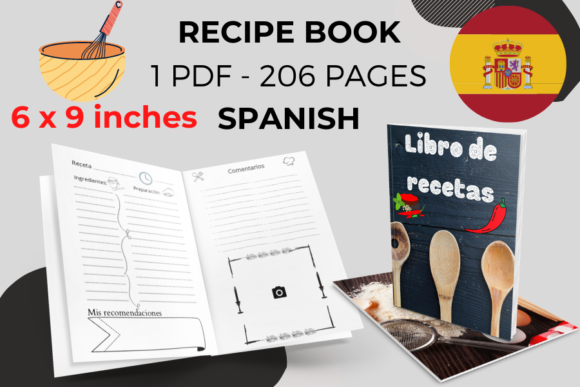
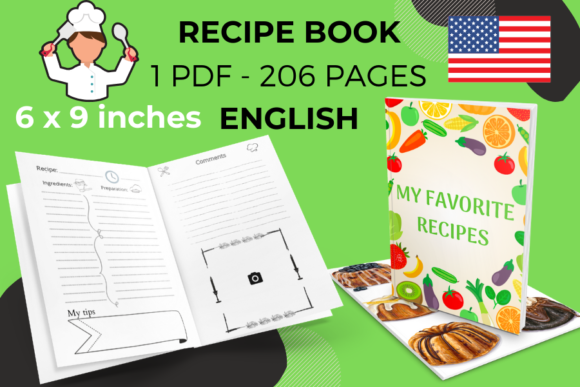
In the evolving landscape of digital publishing and content creation, the distinction between a finished product and a foundational asset has become increasingly important. For entrepreneurs, marketers, and creative professionals operating within the Amazon KDP ecosystem, success is no longer defined solely by writing original prose from scratch. Instead, it is often defined by the ability to identify, customize, and deploy high-quality structural templates that meet specific consumer needs. The Recipe Book to Fill in - 1 PDF 206 Pages represents exactly this type of strategic asset. It is not merely a blank notebook; it is a comprehensive, pre-formatted interior designed to streamline the production of low-content and medium-content books, serving as a bridge between creative intent and market-ready publication.
Understanding the utility of this specific 206-page resource requires looking beyond the surface level of "blank pages." This document serves as a standardized framework that addresses the technical and aesthetic demands of modern self-publishing. As the barrier to entry for KDP lowers, the standard for quality rises. Professionals are seeking resources that eliminate formatting errors, ensure consistent margins, and provide a user experience that rivals traditionally published cookbooks. This English-version PDF offers a turnkey solution for those looking to capitalize on the enduring demand for culinary organization, family heritage preservation, and niche dietary tracking without the prohibitive time investment of designing a 206-page layout from zero.
Aligning with Market Trends in Low-Content Publishing
The broader industry context for the Recipe Book to Fill in - 1 PDF 206 Pages is rooted in the maturation of the print-on-demand sector. We have moved past the era where generic lined journals dominated the bestseller lists. Today’s consumers and creators are driven by specificity and utility. There is a significant shift toward functional stationery—books that serve a distinct purpose rather than offering open-ended space. This trend aligns perfectly with the current consumer preference for tangible organization tools in an increasingly digital world. While recipe apps and cloud storage offer convenience, they lack the permanence, giftability, and tactile satisfaction of a physical volume.
For marketers and freelancers, this asset fits into a larger workflow optimization strategy. Time is the most scarce resource in freelance and entrepreneurial ventures. Designing a professional-grade cookbook interior involves understanding bleed settings, gutter margins, font licensing, and pagination logic. By utilizing a pre-made 206-page template, creators bypass hundreds of hours of technical design work. This allows for a pivot toward higher-value activities such as keyword research, cover design differentiation, and audience building. The PDF acts as an accelerator, transforming what was once a month-long design project into a weekend publishing sprint.
The Resurgence of Analog Organization and Heritage Preservation
Cultural trends also play a pivotal role in the relevance of this resource. We are currently witnessing a counter-movement to digital fatigue. Consumers are actively seeking ways to disconnect from screens while engaging in meaningful domestic activities. Cooking and baking have transitioned from daily chores to mindful hobbies and forms of self-expression. Furthermore, there is a growing emphasis on preserving family heritage. As older generations pass, there is an urgent consumer desire to document traditional recipes that exist only in memory or on scattered index cards.
A Recipe Book to Fill in - 1 PDF 206 Pages caters directly to this emotional and practical need. It provides the structure necessary for legacy building. For creators targeting this demographic, the value proposition is clear: you are not selling paper; you are selling the preservation of culture and memory. The 206-page count is significant here. It suggests a substantial volume capable of holding decades of culinary knowledge, distinguishing it from flimsy, short-term notebooks. This depth appeals to serious home cooks and genealogy enthusiasts who view their recipe collection as a long-term project rather than a temporary note-taking exercise.
Technical Specifications and User Experience Design
From a product development perspective, the specific architecture of this PDF matters immensely. A 206-page count is not arbitrary; it strikes a balance between perceived value and printing cost efficiency within Amazon’s royalty structure. Books that are too thin often fail to convey quality, while excessively thick books can suffer from high printing costs that erode margins. This specific page count sits in a sweet spot for competitive pricing and healthy royalties.
Moreover, the "English Version" designation ensures that the terminology, measurement units, and layout conventions align with Anglophone markets. This includes appropriate spacing for imperial measurements, standard categorization headers (Appetizers, Mains, Desserts), and culturally relevant prompt structures. For international sellers or non-native English speakers targeting US, UK, or Canadian markets, this localization is critical. It prevents the subtle friction points that lead to negative reviews, such as confusing metric-only fields or awkward phrasing that signals a low-effort product.
- Consistency: Ensures every page aligns perfectly, preventing text drift that plagues amateur designs.
- Prompt Structure: Guides the end-user on what information to record, reducing cognitive load during use.
- Scalability: Allows creators to produce multiple niche variations (e.g., Keto, Vegan, BBQ) using the same reliable base.
- Professional Finish: Includes necessary blank pages and section dividers that enhance the reading experience.
Adapting Workflows for Niche Domination
Savvy entrepreneurs understand that generalist products struggle in saturated markets. The power of the Recipe Book to Fill in - 1 PDF 206 Pages lies in its adaptability for niche domination. Rather than publishing a generic "Family Recipe Book," professionals use this template as a canvas for specialized branding. The interior remains constant, but the external positioning shifts to address micro-audiences.
Consider the application for specific dietary communities. A creator could package this interior as a "Gluten-Free Baking Log" or a "Meal Prep Tracker for Bodybuilders." The prompts within the PDF remain universally useful, but the marketing narrative becomes hyper-specific. This approach leverages the efficiency of a single master asset to build a diverse portfolio. It reflects a modern business methodology where infrastructure is standardized, but customer-facing value propositions are customized. This reduces risk; if one niche underperforms, the underlying asset remains viable for pivoting to another segment without additional design costs.
The Intersection of Digital Assets and Physical Products
It is also worth noting how this resource bridges the gap between digital commerce and physical utility. Although the product is delivered as a downloadable PDF, its ultimate manifestation is physical. This duality requires creators to think across mediums. When listing a book created with this template, the description must highlight the physical benefits derived from the digital file's quality. Marketers must articulate how the crisp lines, ample writing space, and logical flow translate to a superior user experience at the kitchen counter.
This connection extends to bundled offerings. Freelancers and coaches in the culinary or wellness space can use this Recipe Book to Fill in - 1 PDF 206 Pages as a value-add for their services. A nutritionist might include a branded version as part of a coaching package. A food blogger might sell it as merchandise. In these contexts, the book ceases to be just a KDP product and becomes a tool for client retention and brand extension. The ready-to-download nature of the file facilitates instant integration into these broader business models, supporting agile responses to client feedback or seasonal trends.
Future-Proofing Through Quality and Compliance
As Amazon KDP continues to refine its algorithms and quality standards, reliance on professionally formatted interiors becomes a defensive strategy. Platforms are increasingly penalizing duplicate content and poor user experiences. Using a high-quality, 206-page structured template helps differentiate a product from the flood of AI-generated, low-effort spam that occasionally saturates the marketplace. The structured nature of a dedicated recipe book implies human curation and intentional design, signaling quality to both the algorithm and the human browser.
Furthermore, owning a reliable master file future-proofs a creator’s catalog. Trends change, but the fundamental need to organize information persists. By mastering the customization of this specific format, professionals build a skill set that is transferable to other structured journals, planners, and logbooks. The discipline required to effectively utilize and market a Recipe Book to Fill in - 1 PDF 206 Pages cultivates a deeper understanding of print-on-demand mechanics, audience psychology, and asset management. These are durable skills that remain relevant regardless of platform policy updates or fleeting viral trends.
Ultimately, this resource represents more than just a collection of blank pages. It is a testament to the professionalization of the creator economy. It acknowledges that in a crowded marketplace, efficiency, quality, and strategic alignment are the true differentiators. Whether used to build a passive income stream, support a service-based business, or preserve personal history, this 206-page English version PDF provides the solid foundation necessary for sustainable success. It empowers creators to focus less on the mechanics of layout and more on the art of connection, ensuring that the final product resonates deeply with the people who matter most: the end-users filling those pages with their own stories, flavors, and memories.