Accelerating Low-Content Publishing: The Strategic Value of the Creative Writing Planner KDP Interior
The landscape of self-publishing has undergone a profound transformation in recent years. What was once a niche pursuit for hobbyists has evolved into a sophisticated sector of the digital economy, driven by data analytics, design efficiency, and an acute understanding of consumer psychology. For professionals, entrepreneurs, and creators navigating this space, success is no longer defined solely by artistic inspiration but by the ability to execute high-quality products with speed and precision. Central to this operational shift is the utilization of specialized assets like the Creative Writing Planner - KDP Interior, a resource that bridges the gap between creative intent and commercial viability.
This tool represents more than just a collection of blank pages or prompts; it is a strategic asset designed for the modern low-content and medium-content publishing model. By providing a pre-formatted, professionally structured foundation, it addresses the most significant bottleneck in the publishing workflow: production time. As the market matures, the distinction between amateur and professional publications increasingly hinges on interior quality, formatting accuracy, and user experience. Understanding how this specific interior template fits into broader industry trends is essential for anyone looking to build a sustainable portfolio on Amazon KDP.
Redefining Efficiency in Digital Product Creation
In the current creator economy, time is the most scarce resource. Freelancers and marketers operating within the self-publishing ecosystem often manage multiple SKUs across various niches. The traditional method of designing a 120-page planner from scratch involves hours of layout adjustment, margin calculation, and typography selection. The Creative Writing Planner - KDP Interior eliminates this friction by offering a turnkey solution that adheres strictly to platform specifications.
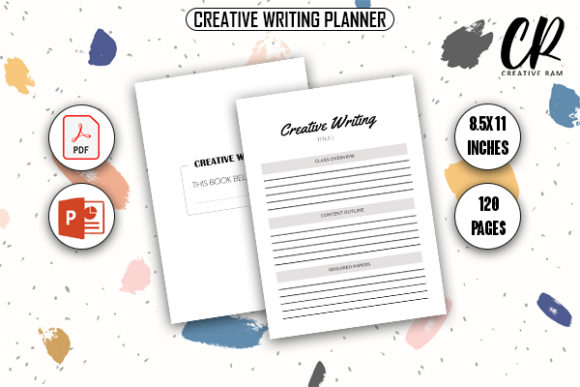
The specification of 8.5″ x 11″ inches is not arbitrary; it is the industry standard for trade paperbacks in the productivity and journaling categories. This dimension offers optimal shelf presence and usability for end-consumers who expect a substantial writing surface. Furthermore, the inclusion of bleed specifications in the ready-to-upload files demonstrates an understanding of print manufacturing realities. Bleed errors remain one of the primary reasons for rejection or poor customer reviews in print-on-demand. By utilizing a pre-validated template with correct bleed settings, creators mitigate technical risk, ensuring that the final physical product matches the digital proof exactly.
This efficiency extends beyond mere convenience. It allows creators to pivot quickly based on market signals. When a new trend emerges in the creative writing community—such as a surge in interest regarding shadow work or structured storytelling—having access to editable PPTX source files enables rapid customization. Professionals can adapt the core structure to meet specific sub-niche demands without rebuilding the architectural framework of the book, thereby maintaining relevance in a fast-moving marketplace.
Meeting the Evolving Needs of Modern Writers
To understand why this specific planner format is gaining traction, one must look at the changing demographics and behaviors of the target audience. The post-pandemic era has seen a massive resurgence in analog creativity. Consumers are experiencing digital fatigue and are actively seeking tactile experiences that facilitate deep work and mindfulness. However, they are not looking for unstructured chaos; they desire guided frameworks that help organize their thoughts without stifling creativity.
The Creative Writing Planner - KDP Interior caters to this psychological need for "structured freedom." Unlike a generic notebook, a dedicated writing planner implies a system. It suggests that the user’s creative output is valuable enough to warrant organization. This aligns with broader lifestyle trends where self-care and professional development intersect. Writers, whether aspiring novelists or content marketers, view these tools as part of their professional toolkit rather than mere stationery.
Moreover, the expectation for interior quality has risen significantly. Early iterations of low-content books often suffered from thin lines, poor contrast, or repetitive layouts that felt robotic. Today’s consumers read reviews meticulously and compare interiors before purchasing. A high-quality print-ready PDF ensures crisp lines and professional typography that meets these elevated standards. The 120-page count strikes a deliberate balance: it is substantial enough to be perceived as a premium value proposition yet light enough to maintain competitive printing costs and retail pricing flexibility. This economic consideration is vital for entrepreneurs managing profit margins in a competitive ad-spend environment.
The Role of Customization in Brand Building
While templates provide a starting point, long-term success in KDP requires differentiation. This is where the availability of both PDF and PPTX formats becomes a critical business advantage. Relying solely on static PDFs limits a creator to a single product variation. In contrast, possessing the source files transforms the planner into a malleable brand asset.
Consider the practical application for a freelance writing coach or an educational entrepreneur. They can utilize the PPTX source files to insert proprietary branding, unique instructional content, or affiliate links to their courses directly into the planner’s interior. This turns a standalone commodity product into a lead generation tool or a supplementary course material. The ability to customize allows for the creation of product bundles, series, or tiered offerings that cater to different segments of the writing community.
This level of adaptability also supports A/B testing strategies. Marketers can create two versions of the same planner with different cover designs or slight interior variations to test market preference. Because the foundational layout is already solved, the testing cycle focuses purely on messaging and aesthetic positioning rather than structural design. This data-driven approach to product development separates sustainable businesses from speculative ventures.
Technical Precision as a Competitive Moat
In an automated print-on-demand environment, technical precision is the baseline for entry. However, achieving consistency across large catalogs remains a challenge for many. The Creative Writing Planner - KDP Interior serves as a quality control mechanism. The "Belongs To" page feature, often overlooked in amateur designs, adds a layer of professionalism and utility that enhances the user experience. It acknowledges the personal nature of the item and provides immediate functional value upon opening the book.
Furthermore, the integration of bleed-ready files addresses the complexities of full-bleed printing. Many creators struggle with the safe zone margins, resulting in text being trimmed or white borders appearing unintentionally. By utilizing a professionally engineered template, publishers ensure that decorative elements, headers, and footers extend correctly to the edge of the page. This attention to detail signals to the algorithm and the consumer that the product is legitimate. Amazon’s search algorithms increasingly favor books with lower return rates and higher engagement metrics; a technically flawless interior contributes directly to these performance indicators.
The duality of file formats also future-proofs the asset. While PDF is the current standard for KDP upload, retaining the PPTX ensures compatibility with other platforms or future software updates. It prevents vendor lock-in and preserves the intellectual property value of the layout. For agencies or teams managing multiple accounts, standardized source files streamline collaboration, allowing designers to hand off projects to virtual assistants or junior staff with clear guidelines and reduced error rates.
Strategic Integration into Broader Business Workflows
Ultimately, the adoption of resources like this planner should be viewed through the lens of business scalability. For the solopreneur, it buys back time to focus on marketing, keyword research, and audience building. For the agency, it standardizes output quality across diverse client portfolios. For the educator or coach, it provides a tangible extension of their digital curriculum.
The relevance of the Creative Writing Planner - KDP Interior lies in its alignment with the maturation of the self-publishing industry. We have moved past the gold rush phase of uploading thousands of low-quality notebooks. The current era rewards specificity, quality, and user-centric design. This planner embodies those principles by combining technical compliance with thoughtful structure.
As we look forward, the integration of such assets will likely become even more seamless, potentially connecting with AI-driven content generation or personalized printing services. However, the fundamental need for a well-structured, physically pleasing vessel for human creativity remains constant. By leveraging professionally crafted interiors, creators do not sacrifice originality; rather, they secure a reliable foundation upon which true innovation and business growth can be built. The smartest publishers today understand that their product is not just the book itself, but the efficient, scalable system used to create it. Investing in high-specification, customizable templates is an investment in that system, ensuring longevity and resilience in an ever-evolving digital marketplace.
In conclusion, whether you are a seasoned KDP veteran optimizing your catalog or a new entrant seeking a professional edge, the specifications and features of this planner address the critical pain points of modern publishing. From the precise 8.5″ x 11″ dimensions to the versatile PPTX source files, every element is engineered to support a workflow that values both speed and excellence. In a market saturated with mediocrity, technical proficiency and user-focused design are the ultimate differentiators, and this interior template provides the blueprint for achieving both.