Weight Loss L KDP Template Design Guide
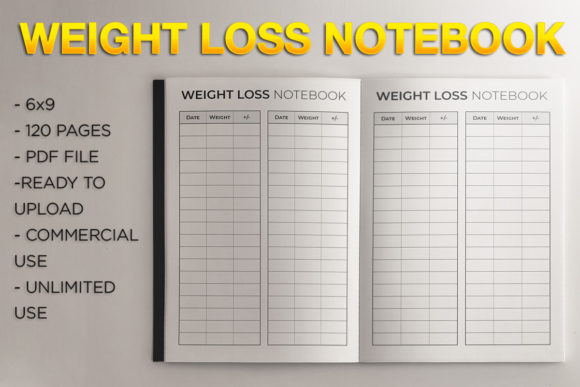
Streamlining your publishing workflow begins with selecting the right structural foundation, and a professionally crafted Weight Loss L KDP Template offers exactly that for creators in the health and wellness niche. This specific 6″ x 9″ no bleed design asset eliminates technical guesswork, allowing graphic designers and self-publishers to focus on visual hierarchy and user experience rather than margin calculations. As an instant download PDF containing 120 pages, it serves as a robust framework for low-content books, ensuring that the final printed product meets Amazon’s strict specifications while maintaining a polished, editorial aesthetic.
The Role of Pre-Designed Assets in Editorial Layout
In modern graphic design, efficiency does not mean sacrificing quality. Utilizing a specialized template is a strategic decision that enhances consistency across creative projects. For designers exploring print design or digital product creation, this asset provides a pre-validated grid system. The 6″ x 9″ trim size is an industry standard for journals and trackers because it balances portability with ample writing space. By starting with a no bleed configuration, designers ensure that critical content remains safely within the live area, preventing costly reprinting errors and ensuring a professional presentation.
This approach aligns with broader design trends where modular systems accelerate production without compromising brand identity. Whether you are creating a standalone product or expanding an existing wellness brand, the template acts as a reliable canvas. It allows for rapid iteration and testing of different cover concepts or interior variations while keeping the core UX intact.
Evaluating Visual Hierarchy and Usability
When integrating a Weight Loss Template No Bleed Design into your portfolio, consider how the internal structure supports the end user. Effective editorial design prioritizes readability and intuitive navigation. Even in low-content books, the placement of lines, prompts, and tracking tables influences engagement. A well-structured template guides the eye naturally, reducing cognitive load and making the daily habit of tracking feel effortless rather than tedious.
- Consistency: Maintains uniform margins and spacing across all 120 pages for a cohesive look.
- Scalability: Easily adaptable for other niches by modifying headers or adding custom typography.
- Technical Compliance: Pre-formatted for KDP upload, reducing rejection risks during the proofing stage.
- Creative Flexibility: Serves as a base layer for overlaying unique branding elements or illustrations.
Practical Applications Across Creative Disciplines
Beyond simple book interiors, understanding the mechanics of this template informs better design decisions in adjacent fields. The principles of clean layout and functional whitespace found in these trackers translate directly to UI design and web design, where user input fields require similar clarity. Marketers can leverage the visual style of these templates to create matching social media graphics or digital marketing assets, ensuring a unified visual language across platforms.
For those involved in packaging design or merchandise creation, the 6″ x 9″ format offers a tangible reference point for physical proportions. Designers can use the template to prototype how graphics wrap around a physical object or how text scales in print versus screen. This cross-disciplinary application reinforces the value of high-quality creative assets; they are not just single-use files but foundational elements that strengthen overall brand communication and visual identity.
Tips for Maximizing Design Impact
To get the most from this resource, treat the PDF as a starting point rather than a final destination. Evaluate the typography and line weight to ensure they match your specific brand voice. If your target audience prefers a minimalist aesthetic, the existing no bleed design likely suffices. However, if your brand relies on bold color palettes or complex imagery, consider how to introduce these elements without violating the safe zone constraints. Always test your modifications with a physical proof to verify that the visual hierarchy translates effectively from screen to paper.
Ultimately, thoughtful design choices distinguish successful publications in a crowded marketplace. Quality creative assets like this template provide the technical reliability needed to produce professional results consistently. By combining a solid structural foundation with intentional visual styling, designers and creators can deliver products that are not only aesthetically pleasing but also functionally superior, enhancing both user satisfaction and long-term brand credibility.