Empowering Creators: The Strategic Value of the Blank Storyboard Notebook KDP Interior
In the rapidly evolving landscape of digital publishing and creative entrepreneurship, the tools we use to facilitate imagination are just as important as the ideas themselves. For independent publishers, educators, and creative professionals, the Blank Storyboard Notebook - KDP Interior represents more than just a collection of empty boxes; it is a foundational asset in the low-content and medium-content publishing ecosystem. As the demand for specialized analog tools grows in an increasingly digital world, understanding the strategic application of high-quality, pre-formatted interiors has become essential for success on platforms like Amazon KDP.
This resource is designed specifically for creators who understand that time is their most valuable currency. By providing a professional-grade foundation, this interior template allows entrepreneurs to bypass the tedious technical setup of book design and focus entirely on niche research, marketing, and brand building. Whether you are targeting film students, UX designers, or children’s book authors, the utility of a well-structured storyboard notebook lies in its ability to bridge the gap between abstract thought and tangible execution.
The Intersection of Analog Planning and Digital Workflows
We are currently witnessing a significant counter-trend in productivity and creative workflows. Despite the proliferation of sophisticated software and AI-driven ideation tools, there is a persistent and growing preference for tactile, paper-based planning among professionals. This is not merely nostalgia; it is a cognitive choice. Research consistently suggests that handwriting and sketching engage different neural pathways than typing, leading to better retention and more divergent thinking. The Blank Storyboard Notebook - KDP Interior capitalizes on this insight by offering a structured yet open canvas that encourages this type of deep work.
For KDP publishers, this trend signals a shift away from generic lined journals toward functional, purpose-driven notebooks. Consumers are no longer satisfied with blank pages; they seek guided frameworks that support specific activities. A storyboard format serves a multitude of disciplines beyond traditional filmmaking. It is now a staple in user experience (UX) design for mapping customer journeys, in education for visual storytelling exercises, in marketing for ad campaign conceptualization, and in corporate training for process visualization. By utilizing a versatile interior template, publishers can address these diverse micro-niches without reinventing the wheel for each project.
Technical Precision and Platform Compliance
One of the most significant barriers to entry for new KDP publishers is the technical learning curve associated with book formatting. Margins, bleed settings, gutter safety zones, and resolution requirements can be unforgiving. A single error can result in rejected files or, worse, a poor customer experience due to content being cut off during printing. This is where the value proposition of a tested, professional interior becomes paramount.
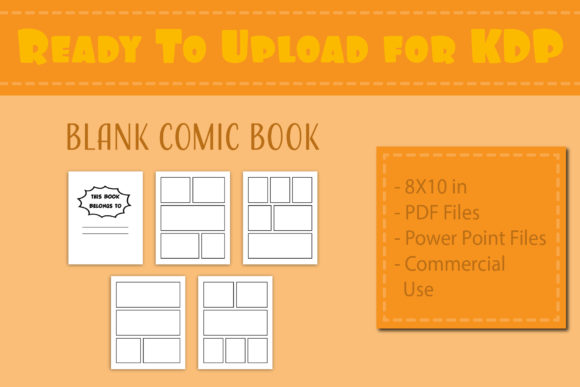
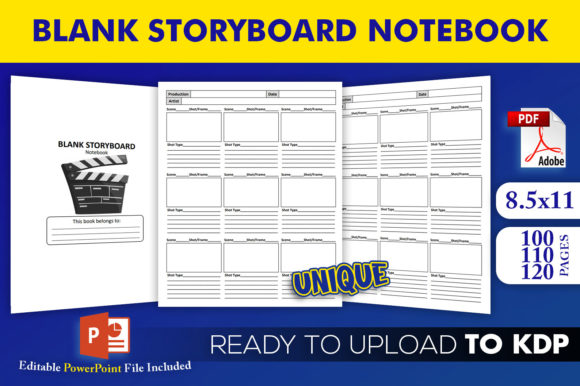
This specific Blank Storyboard Notebook - KDP Interior package eliminates technical risk. The files have been rigorously tested on KDP to ensure seamless approval and print quality. The inclusion of three distinct PDF options—100, 110, and 120 pages—provides immediate flexibility. This variation is crucial because different niches have different expectations regarding book thickness and perceived value. A 100-page notebook might be perfect for a semester-long film course, while a 120-page version may appeal to professional animators working on longer projects. Having these variations ready allows for rapid A/B testing of market preferences without additional design overhead.
Furthermore, the trim size of 8.5x11 inches is the industry standard for workbook-style publications. This dimension offers ample space for detailed sketches and annotations, distinguishing it from smaller, less functional journal sizes. High-resolution interiors ensure that lines remain crisp and professional, avoiding the pixelation or blurriness that often plagues amateur templates. In a marketplace where reviews hinge on print quality, starting with a verified high-fidelity source file is a non-negotiable best practice.
Customization as a Competitive Advantage
While ready-to-upload PDFs provide speed, long-term sustainability in KDP publishing requires differentiation. This is why the inclusion of an Editable Source File (PowerPoint PPTX) is a critical component of this download. PowerPoint is often overlooked as a design tool, but for low-content books, it offers an unparalleled balance of accessibility and functionality. Unlike complex vector software that requires a steep learning curve, PowerPoint allows users to modify layouts, adjust box dimensions, add headers, or insert branding elements with minimal friction.
This editability transforms a static product into a dynamic platform. Consider the practical applications:
- Niche Specificity: You can easily add terminology relevant to specific fields, such as "Camera Angle" and "Lighting Notes" for filmmakers, or "User Pain Point" and "Solution" for product managers.
- Branding Opportunities: Freelancers and agencies can customize the interior to include their logo or website, turning the notebook into a lead generation tool or client gift.
- Educational Adaptation: Teachers can modify the grid structure to suit different age groups or lesson plans, creating custom resources that mass-market publishers cannot offer.
- Series Development: Publishers can maintain consistent branding across multiple titles while tweaking internal layouts to create a cohesive product line.
The ability to iterate quickly means you can respond to market feedback in real-time. If customers request wider margins for binding or additional note-taking space, the editable source file allows you to implement these changes instantly rather than commissioning expensive redesigns.
Addressing the Needs of Modern Entrepreneurs
The modern creator economy is defined by agility and resourcefulness. Solopreneurs and small teams cannot afford to spend weeks formatting a single product. They need assets that integrate smoothly into existing workflows while maintaining professional standards. The Blank Storyboard Notebook - KDP Interior aligns perfectly with this operational reality. It functions as a force multiplier, enabling publishers to expand their catalog efficiently.
Moreover, this resource supports the broader movement toward passive income diversification. For marketers and freelancers, KDP publishing often serves as a secondary revenue stream that complements their primary services. A graphic designer might sell storyboard notebooks to their animation clients; a business coach might create visual planning journals for workshop attendees. In these contexts, the notebook is not just a product to be sold on Amazon; it is an extension of professional expertise and a tangible touchpoint in a service-based relationship.
The relevance of this tool also extends to the changing nature of remote work and distributed teams. As collaboration becomes increasingly asynchronous, visual communication tools gain importance. Storyboards provide a universal language that transcends text-heavy documentation. By publishing specialized notebooks that facilitate this type of communication, creators are tapping into a fundamental shift in how work gets done in the post-pandemic era.
Strategic Implementation for Long-Term Success
Acquiring high-quality assets is only the first step; successful implementation requires strategic thinking. When utilizing this Blank Storyboard Notebook - KDP Interior, consider the following approaches to maximize impact:
- Keyword Research Integration: Before uploading, validate your niche. Use the editable PPTX to tailor the title page and introduction to match high-intent search terms. If "video production planner" has higher volume than "storyboard notebook," adjust your metadata and cover design accordingly.
- Cover Design Synergy: The interior sets expectations that the cover must fulfill. Ensure your cover art reflects the professional quality of the high-resolution interiors. A mismatch between a premium interior and an amateur cover will kill conversion rates.
- Content Enrichment: Utilize the editable source file to add value beyond the grid. Include a brief guide on storyboarding techniques, aspect ratio references, or visual vocabulary lists. This moves the product from "low-content" to "medium-content," justifying a higher price point and improving customer satisfaction.
- Cross-Platform Promotion: Leverage the physical nature of the product in digital spaces. Create video content showing the notebook in use—sketching scenes, planning projects, or organizing thoughts. Visual demonstration builds trust and showcases the paper quality and layout utility in ways that static images cannot.
Ultimately, the value of this download lies in its dual nature as both a finished product and a creative starting point. It respects the publisher's time by handling the technical heavy lifting while preserving the creative freedom necessary to build a distinctive brand. In an industry crowded with generic offerings, the ability to deliver specialized, high-quality, and thoughtfully designed tools is what separates sustainable businesses from fleeting trends.
As the KDP marketplace continues to mature, the winners will be those who treat their publications as genuine solutions to user problems rather than mere commodities. The Blank Storyboard Notebook - KDP Interior provides the infrastructure to do exactly that. By combining tested technical reliability with flexible customization options, it empowers creators to meet the nuanced demands of today’s visual thinkers, educators, and professionals. Whether you are launching your first title or scaling an existing portfolio, this resource offers a pragmatic pathway to creating products that resonate, perform, and endure in a competitive digital economy.