Hand Drawn Weave Mazes - 9-22-20: Strategic Application for KDP and Creative Publishing
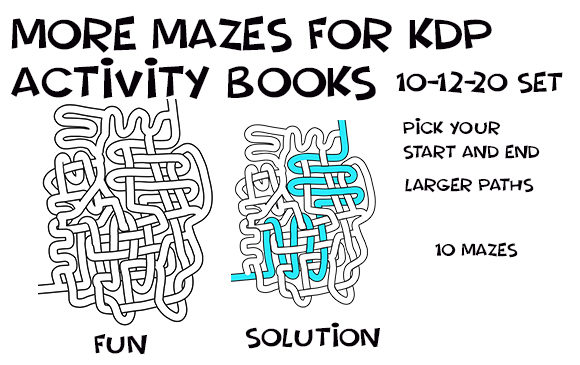
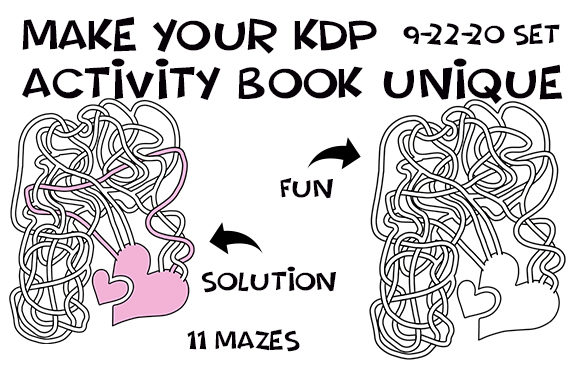
The Hand Drawn Weave Mazes - 9-22-20 collection represents a specific intersection of analog charm and digital publishing utility. For creators, publishers, and educators operating in the low-to-medium content book space, this asset set is more than a bundle of puzzles; it is a case study in differentiation. Created on September 22, 2020, this set comprises 11 distinct mazes that deviate from standard algorithmic generation by integrating central imagery into the puzzle structure. Understanding the strategic value of these assets requires looking beyond their aesthetic appeal and examining how they function within product positioning, customer experience, and long-term brand building.
Differentiation Through Integrated Visual Design
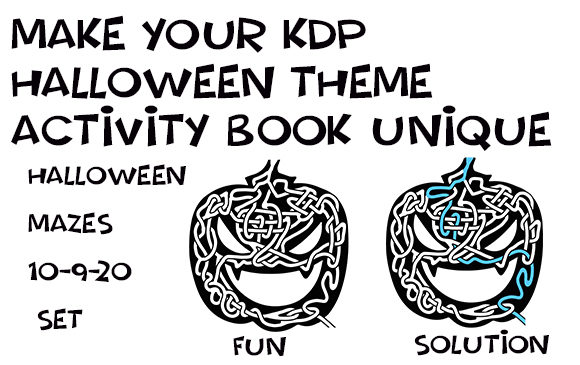
In a marketplace saturated with procedurally generated maze books, the primary challenge for entrepreneurs is establishing perceived value. The defining characteristic of the Hand Drawn Weave Mazes - 9-22-20 set is the intentional placement of an image on the page with the maze woven around it. This is not merely decorative; it is a functional design choice that alters user engagement. Standard mazes often treat the page as a grid to be filled, resulting in a sterile, repetitive user experience. By anchoring the maze around a random image, the creator introduces a focal point that breaks visual monotony.
For KDP publishers and activity book creators, this integration serves a dual purpose. First, it increases the perceived complexity and craftsmanship of the product, justifying a higher price point or encouraging better reviews. Second, it creates natural "pause points" for the solver, transforming a mindless tracing task into a more mindful activity. When planning your next publication, consider how assets like these can shift your product from a commodity to a curated experience. The hand-drawn nature implies human oversight, which builds trust with an audience increasingly fatigued by low-effort AI content.
Technical Specifications and Production Planning
Successful implementation of any creative asset relies on understanding its technical constraints and advantages. The Hand Drawn Weave Mazes - 9-22-20 set was created specifically on US Letter size paper, a critical detail for print-on-demand planning. While many KDP books utilize trim sizes like 8.5x11 or 6x9, starting with US Letter source files provides maximum flexibility for scaling down without losing resolution. However, it also requires careful margin management during the formatting phase to ensure the weave details are not lost in the gutter or trimmed off.
The asset delivery format supports efficient workflow integration:
- Blank Mazes (JPG/PNG 300 DPI): High-resolution files suitable for direct print production. The availability of both formats allows creators to choose based on their layout software preferences. JPGs are generally smaller and easier to handle in bulk, while PNGs preserve transparency if layering is required.
- Solution Mazes (PNG): Essential for quality assurance and customer satisfaction. Including solutions is a non-negotiable best practice in activity book publishing. Having them pre-rendered saves hours of manual solving or reverse-engineering.
- US Letter Origin: Ensures crisp line work at standard large-format sizes. If repurposing for smaller journals or planners, the excess resolution prevents pixelation.
When incorporating these into a project, verify that your export settings maintain the 300 DPI standard. Upscaling lower-resolution files leads to blurry lines that ruin the hand-drawn aesthetic. Conversely, using these high-quality masters allows you to future-proof your content for potential hardcover editions or premium spiral-bound versions where print fidelity matters significantly.
Strategic Use Cases Beyond Simple Puzzles
While the obvious application is a standalone maze book, limiting the Hand Drawn Weave Mazes - 9-22-20 set to this single use case leaves significant value on the table. Entrepreneurs and educators should view these as modular components for broader product ecosystems.
Educational and Therapeutic Resources
For educators and therapists, the "weave" aspect offers unique cognitive benefits. Unlike simple path-tracing, weaving mazes require spatial reasoning and figure-ground discrimination. The central image adds a layer of visual processing that can be leveraged in occupational therapy materials or special education resources. When marketing to this demographic, focus on the cognitive load and motor skill development rather than just entertainment value. Positioning the product as a tool for focus and dexterity opens doors to institutional sales and specialized niches.
Brand Building and Lead Magnets
Freelancers and bloggers in the creative niche can use individual mazes from this set as high-value lead magnets. A generic PDF checklist is easily ignored; a beautifully designed, printable hand-drawn maze is kept. It demonstrates aesthetic taste and provides immediate gratification. Because there are 11 unique designs, you have enough variety to create a mini-series or a sampler pack without exhausting the asset's novelty. This approach builds an email list of engaged users who appreciate quality design, creating a warmer audience for future paid offerings.
Hybrid Activity Journals
Consider integrating these mazes into guided journals or planners. The randomness of the central images makes them versatile fillers that prevent journal fatigue. Placing a weave maze after a heavy reflection prompt or a dense goal-setting section provides necessary cognitive relief. This strategic pacing improves user retention and completion rates, which directly correlates to positive reviews and word-of-mouth referrals.
Risk Mitigation and Intentional Implementation
Adopting pre-made assets carries inherent risks regarding originality and market saturation. To use Hand Drawn Weave Mazes - 9-22-20 effectively, you must mitigate the risk of creating a generic product. Relying solely on the assets without adding contextual value is a strategy destined for mediocrity.
Avoid Random Assembly: Do not simply arrange the 11 mazes sequentially and publish. This lacks narrative flow and editorial intent. Instead, curate the selection. Perhaps only five fit the theme of your mindfulness journal. Maybe three are perfect for a senior cognitive health booklet. Intentional curation signals expertise.
Contextualize the Imagery: Since the set features "random images," there is a risk of thematic dissonance. Before finalizing your layout, audit each maze against your target audience's expectations. A whimsical doodle might delight a younger demographic but alienate a professional seeking serious stress relief. You may need to edit or overlay elements to align the random imagery with your specific brand voice. Treat the provided images as raw material, not finished art.
Licensing and Exclusivity Awareness: Understand the terms of use associated with the 9-22-20 release. If the license is non-exclusive, other creators have access to identical files. Your competitive advantage cannot be the maze itself; it must be the packaging, the accompanying text, the cover design, and the marketing angle. Compete on execution, not just asset ownership.
Enhancing Customer Experience Through Quality Control
The decision to use hand-drawn assets over vector-generated ones is fundamentally a decision about texture and feel. However, this organic quality demands rigorous testing. Hand-drawn lines can sometimes vary in weight or contain artifacts that look charming on screen but print poorly on standard KDP paper stock.
Before launching any product utilizing Hand Drawn Weave Mazes - 9-22-20, order a physical proof. Check the following:
- Line Visibility: Ensure the weave lines remain distinct against the central image. Low contrast can frustrate solvers, especially those with visual impairments.
- Paper Bleed: Verify that the ink density doesn't cause bleed-through on 55# or 60# cream paper, common in KDP activity books.
- Solution Accuracy: Cross-reference every solution maze against the blank version. Errors in solution pages destroy credibility instantly.
This level of operational diligence separates professional publishers from hobbyists. It transforms a digital download into a reliable physical product. Remember that in the activity book niche, the user’s frustration tolerance is low. A maze that is impossible to solve due to printing errors or poor design adaptation results in negative feedback that outweighs the convenience of using pre-made assets.
Long-Term Value and Portfolio Integration
Finally, consider the role of Hand Drawn Weave Mazes - 9-22-20 within your long-term content strategy. Assets dated from 2020 have established a track record. They are not experimental; they are proven. Integrating them into your portfolio allows you to test market response to hand-drawn aesthetics with lower upfront investment than commissioning custom art.
Use performance data from products featuring these mazes to inform future decisions. Do customers engage more with pages containing central images? Do weave mazes result in longer session times compared to standard loops? These insights are valuable intellectual property. Over time, you can transition from using stock assets to commissioning bespoke variations based on what actually resonates with your audience. The 9-22-20 set serves as both a production asset and a market research tool.
Ultimately, the strategic utility of this collection lies in its balance of specificity and adaptability. It offers enough uniqueness to stand out in a crowded feed, yet enough neutrality to fit diverse niches. Success depends entirely on the intentionality of the creator. By respecting the technical specifications, mitigating risks through curation, and focusing on the end-user experience, professionals can leverage these hand-drawn weave mazes to build sustainable, high-quality publishing businesses.