KDP Bowling Log Book Interior: A Practical Resource for Publishers and Bowlers
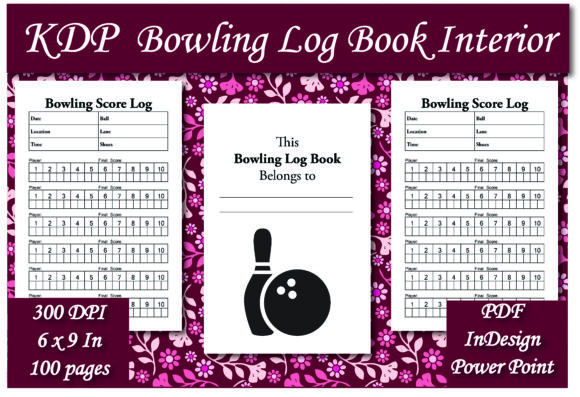
Creating a successful low-content book on Amazon KDP often comes down to the utility of the interior. For the bowling niche, a generic notebook rarely satisfies the specific needs of league players or serious amateurs. This KDP Bowling Log Book Interior is designed to bridge that gap by offering a structured, 100-page tracking system specifically formatted for the sport. Rather than forcing users to draw lines or remember what metrics matter, this pre-formatted interior captures the essential data points of every game: Date, Ball, Location, Lane, Time, Shoes, Player, and Final Score.
The true value of this resource lies in its dual nature as both a finished product and a customizable template. Because the pack includes editable InDesign and PowerPoint files alongside the print-ready PDF, it serves two distinct audiences: KDP publishers looking for a high-quality base to build upon, and bowling enthusiasts who want a personalized physical logbook. Understanding how to leverage these formats in real-world scenarios is key to maximizing the potential of this 6x9 inch interior.
Real-World Applications for League Players and Coaches
Bowling is a sport of repetition and adjustment, yet many players rely on memory or scattered notes on their phones to track progress. This log book interior solves the fragmentation problem by centralizing performance data. For a league bowler, the specific fields included in this layout address common pain points that generic journals miss.
Consider the "Ball" and "Lane" fields. Modern bowlers often carry multiple balls with different coverstocks and core dynamics. Knowing that you scored 220 on a specific date is useful, but knowing you achieved it with your urethane ball on Lane 14 at Sunset Lanes provides actionable intelligence. Over the course of a 100-page book, a player can identify patterns, such as consistently lower scores on outside lanes or better performance with a specific ball during late-night sessions. The inclusion of a "Shoes" field might seem minor, but for players who own multiple pairs with different slide soles, tracking which shoe was worn can help diagnose approach issues when form breaks down unexpectedly.
Coaches and instructors also find immense practical value in this format. When working with students, having a standardized log allows for objective review rather than subjective recollection. A coach can ask a student to bring their log book to lessons, quickly scan the "Final Score" and "Location" entries, and spot trends that indicate mechanical flaws or mental blocks. The 6x9 size is particularly advantageous here; it fits easily into a bowling bag alongside towels and rosin bags, making it more likely to be used consistently than a larger 8.5x11 journal that feels cumbersome at the alley.
Strategic Customization for KDP Publishers
For those using this KDP Bowling Log Book Interior to create products for sale, the inclusion of source files transforms a static asset into a flexible product line. The market for bowling journals has baseline competition, but customization is how sellers differentiate their offerings. Having access to the InDesign and PowerPoint files allows you to adapt the interior to specific sub-niches without starting from scratch.
You might observe that youth bowlers have different tracking needs than adult league players. With the editable files, you could simplify the layout by removing the "Shoes" or "Ball" columns for a kids' version, replacing them with space for stickers or motivational quotes. Conversely, for a professional or tournament-focused edition, you could use the InDesign file to add columns for oil pattern names, pin carry percentages, or spare conversion rates. This ability to modify the master template means one purchase can yield multiple unique ASINs, each targeting a slightly different segment of the bowling community.
The PowerPoint option is particularly valuable for creators who may not have Adobe Creative Cloud subscriptions. It lowers the barrier to entry for customization, allowing sellers to adjust fonts, add branding, or tweak margins using software they already own. This flexibility ensures that even if you aren't a professional graphic designer, you can still produce a polished, proprietary interior that stands out in search results.
Technical Considerations for Print and Digital Use
Before uploading or printing this interior, there are practical technical aspects to consider to ensure the final product meets user expectations. The 6x9 inch trim size is the industry standard for portable logbooks, but it requires careful margin management. When using the provided PDF for direct upload, verify that your KDP settings match the bleed and safe zone requirements exactly. While the file is marketed as ready-to-upload, platform specifications can change, so running a digital proof is always a prudent step to ensure the binding gutter doesn’t obscure the "Date" or "Player" columns.
For those editing the files, pay close attention to font licensing and consistency. If you swap out the original typeface in InDesign or PowerPoint to match your brand aesthetic, ensure the new font remains legible at small point sizes. Bowling alleys are often dimly lit, and players may be filling out logs in low-light conditions. High contrast and clean sans-serif typography are functional necessities, not just aesthetic choices. Additionally, consider the paper quality implications. Standard KDP white paper is suitable for pencil or ballpoint pen, but if you plan to market this to users who prefer gel pens or markers, you may need to add a disclaimer about bleed-through or adjust the design to include blank backing pages between logs.
Evaluating Suitability and Limitations
While this KDP Bowling Log Book Interior is comprehensive, it is important to recognize where it fits best and where alternative solutions might be superior. The strength of this layout is its focus on core game metrics. It excels as a quick-reference tracker for recreational and league bowlers who want to monitor scores and equipment usage over time. The 100-page count strikes a balance between longevity and portability, typically lasting through one to two full league seasons depending on frequency of play.
However, users seeking advanced statistical analysis might find the analog format limiting. This log book does not calculate averages, handicap adjustments, or strike percentages automatically. It is a raw data collection tool, not an analytics engine. Publishers should be transparent about this distinction in their book descriptions to manage buyer expectations. Positioning the book as a "mindfulness and tracking tool" rather than a "statistical calculator" helps attract the right audience—those who value the tactile experience of writing and reviewing their game away from screens.
Another consideration is the fixed nature of the column headers in the PDF version. If your target audience plays duckpin or candlepin bowling, the standard ten-pin terminology or scoring scale might require adjustment. This reinforces the importance of utilizing the editable source files. By assessing the specific needs of your intended readership before publishing, you can determine whether the out-of-the-box PDF is sufficient or if the InDesign/PowerPoint files are necessary to create a truly helpful resource.
Ultimately, the effectiveness of this interior depends on alignment between the user's intent and the book's structure. For KDP sellers, it offers a professional foundation that saves dozens of hours of design work while providing ample room for creative differentiation. For end-users, it provides a disciplined framework for improvement that turns casual games into measurable progress. Whether used as-is or modified for a specialized niche, this log book interior addresses the tangible need for organized, accessible record-keeping in a sport where details dictate success.