Evaluating KDP Interior Tic-Tac-Toe Game Paper for Low-Content Publishing
For self-publishers and creators utilizing Amazon’s Kindle Direct Publishing (KDP) platform, sourcing reliable interiors is a critical step in product development. The KDP Interior Tic-Tac-Toe Game Paper represents a specific category of low-content assets designed to streamline the creation of activity books, travel journals, and puzzle collections. This resource typically arrives as a pre-formatted digital file intended for immediate integration into publishing workflows. Understanding the technical specifications, practical applications, and strategic limitations of this asset is essential for determining whether it aligns with current publishing goals.
Defining the Asset and Technical Specifications
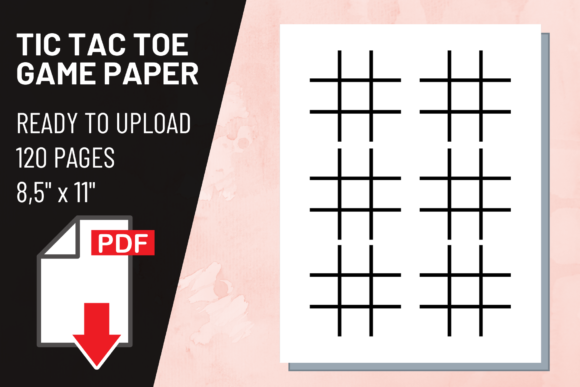
The KDP Interior Tic-Tac-Toe Game Paper is not merely a collection of grid images; it is a production-ready document tailored to KDP’s strict printing guidelines. When evaluating this package, the primary value proposition lies in its adherence to industry standards. The standard configuration includes a 120-page manuscript formatted at 8.5″ x 11″, which corresponds to the most popular trim size for activity books in the North American market.
Technical fidelity is paramount when assessing print-on-demand materials. This interior is provided as a high-quality PDF file at 300 dpi (dots per inch). This resolution is the minimum threshold required by KDP to ensure that lines appear crisp and black rather than pixelated or grayish upon printing. Furthermore, the file is configured with no bleed. This distinction is vital for creators; "no bleed" means all content is contained within safe margins, preventing any part of the tic-tac-toe grid from being trimmed off during the binding process. For publishers who do not wish to extend graphics to the edge of the page, this specification eliminates the need for manual margin adjustments or resizing, reducing the risk of formatting errors during the upload phase.
Strategic Applications and Use Cases
Interest in tic-tac-toe game paper generally stems from a need for efficient content generation. However, the utility of this specific interior extends beyond simple nostalgia games. Evaluating where this asset fits requires looking at broader niche strategies.
- Travel Activity Books: The 8.5″ x 11″ format provides ample space for large grids, making it suitable for road trip or airplane activity books where fine motor control may be difficult. The simplicity of tic-tac-toe makes it an ideal filler between more complex puzzles like word searches or mazes.
- Educational Workbooks: For early childhood education niches, this paper serves as a tool for teaching logic, turn-taking, and pattern recognition. Publishers often combine these pages with handwriting practice or counting exercises to create comprehensive learning resources.
- Senior Cognitive Engagement: Large-print tic-tac-toe interiors are frequently utilized in books designed for seniors or individuals with cognitive impairments. The familiar gameplay offers mental stimulation without the frustration associated with complex rules, making this interior a strong candidate for therapeutic or recreational senior care markets.
- Camping and Outdoor Journals: As a screen-free entertainment option, this game paper integrates well into camping logbooks or nature journals, providing structured downtime activities for families.
Benefits and Efficiency Tradeoffs
The primary benefit of acquiring a pre-made KDP Interior Tic-Tac-Toe Game Paper is time efficiency. Creating 120 pages of perfectly aligned, 300 dpi grids manually can consume hours of design time. Utilizing a ready-to-upload file allows creators to focus on cover design, keyword research, and marketing rather than repetitive layout tasks. Additionally, the assurance of correct margins and resolution mitigates the risk of rejection during KDP’s automated review process.
However, these benefits come with inherent tradeoffs that must be weighed objectively. The most significant consideration is exclusivity. Because this is a standardized package available to multiple users, the interior lacks uniqueness. In a saturated marketplace, identical interiors can lead to customer dissatisfaction if buyers recognize recycled content across different titles. Furthermore, the "no bleed" constraint, while safe, limits aesthetic flexibility. Creators aiming for a modern, edge-to-edge design style will find this format restrictive. The fixed 120-page count also dictates the book's thickness and spine width; if a project requires fewer or more pages to hit a specific price point or royalty tier, the creator must either purchase multiple packages or supplement with other content.
Situations Where This Interior Is a Strong Fit
This tic-tac-toe game paper is optimally suited for specific publishing scenarios. It is an excellent choice for beginners testing the low-content market who need to minimize upfront investment and technical complexity. It is also appropriate for high-volume publishers who prioritize speed over bespoke design, using the interior as a base component in larger compilation books.
Additionally, this asset performs well when used as a secondary feature rather than the sole selling point. For example, a "Summer Vacation Activity Book" where tic-tac-toe comprises 20% of the content benefits from the consistency and quality of this pre-made interior without relying on it entirely for value. The 8.5″ x 11″ size specifically favors general-purpose activity books; if the target demographic is adults seeking portable pocket-sized puzzles, this trim size would be inappropriate, but for family-oriented or educational titles, it remains the industry standard.
When to Consider Alternatives
Despite its convenience, there are distinct situations where alternative solutions are preferable. If the publishing goal is to build a premium brand known for original artwork and unique user experiences, generic tic-tac-toe paper may dilute brand equity. In such cases, hiring a designer to create custom layouts or purchasing exclusive commercial rights to unique illustrations is a more viable strategy.
Alternatives should also be considered for international markets. While 8.5″ x 11″ is standard in the US, A4 is often preferred in European and Asian markets. Using a US-letter sized interior for a globally targeted book may result in poor customer reviews regarding sizing. Furthermore, if the niche demands specialized variations—such as 3D tic-tac-toe, misère tic-tac-toe, or themed grids featuring characters or seasonal elements—a standard grid package will fail to meet audience expectations. Finally, creators focusing on hardcover editions or premium color printing should verify that the paper weight and opacity assumptions of this standard interior align with their chosen print options, as standard interiors are typically optimized for black-and-white paperback production.
Practical Decision-Making Insights
Selecting the right KDP Interior Tic-Tac-Toe Game Paper requires balancing operational efficiency with market differentiation. Before integrating this 120-page, 300 dpi PDF into a project, creators should conduct a competitive analysis of the top ten bestsellers in their intended sub-niche. If existing leaders use identical generic grids, entering that space with the same asset offers little competitive advantage. Conversely, if competitors have poorly formatted or low-resolution interiors, this high-quality package could serve as a meaningful upgrade.
Publishers should also calculate the royalty implications of the fixed page count. At 120 pages, the printing cost is set; creators must ensure their pricing strategy accommodates this cost while remaining attractive to buyers. If the math does not work, modifying the book length by adding introductory pages, solution keys, or complementary activities becomes necessary. Ultimately, this interior is a functional tool. Its value is determined not by the file itself, but by how strategically it is deployed within a broader publishing ecosystem. By understanding both its capabilities and its constraints, creators can make informed decisions that support sustainable growth in the low-content publishing sector.