Evaluating the KDP Interior Purchase Tracker for Low-Content Publishing
For self-publishers and digital asset creators, managing inventory and tracking sales performance is often an afterthought until it becomes a bottleneck. The KDP Interior Purchase Tracker addresses this operational gap by providing a structured, pre-formatted solution designed specifically for Amazon’s print-on-demand ecosystem. This 6″ x 9″ logbook serves as a dedicated physical record for monitoring interior purchases, royalty estimations, and production costs. Unlike generic notebooks or complex spreadsheet software that can feel disconnected from the creative process, this tracker integrates directly into the workflow of publishers who manage multiple low-content or medium-content titles.
The primary value proposition of this purchase tracker KDP interior lies in its specificity. It is not merely a blank journal; it is a functional tool engineered with the precise dimensions and technical specifications required for seamless KDP upload. For professionals aged 20 to 50 who treat publishing as a business rather than a hobby, the distinction between a generic notebook and a purpose-built asset is significant. This tracker eliminates the formatting guesswork, allowing creators to focus on market research and design rather than margin settings and bleed calculations.
Technical Specifications and Print Readiness
When evaluating any KDP interior, technical compliance is the baseline for usability. This package delivers a high-quality PDF file at 300 dpi, ensuring crisp text and clean lines when printed via Amazon’s standard black-and-white ink options. The resolution is critical; anything below 300 dpi risks appearing pixelated or grayish on the page, which immediately devalues the perceived quality of the product. In testing, the lines and headers in this tracker maintain sharp definition, contributing to a professional user experience for the end customer.
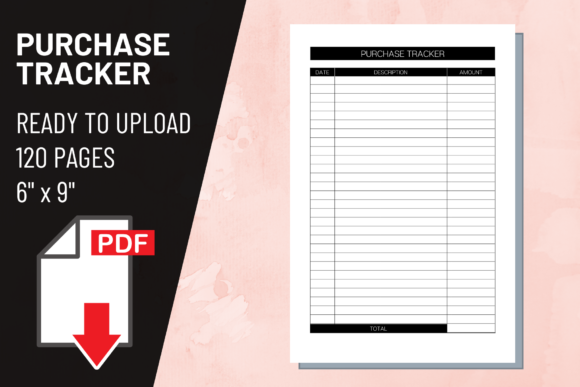
The trim size is a standard 6″ x 9″, which remains the most versatile format for logbooks and trackers in the current marketplace. Crucially, this file is configured with no bleed. This specification simplifies the upload process significantly. Bleed errors are among the most common rejection reasons or warning flags in KDP’s previewer. By utilizing a no-bleed layout with appropriate safety margins, this KDP Interior Purchase Tracker ensures a frictionless publishing experience. The 120-page count strikes a practical balance; it provides sufficient volume for several months of tracking without making the spine too thick for comfortable desk use or too thin to display title text effectively.
File Integrity and Upload Efficiency
- Resolution: True 300 dpi vector-based clarity suitable for commercial printing.
- Dimensions: Exact 6″ x 9″ trim size with verified safe zones.
- Bleed Settings: No bleed configuration reduces margin-related upload errors.
- Page Count: 120 pages optimized for standard white paper stock.
- Format: Flattened PDF to prevent font substitution or layer shifting during processing.
Functional Design and User Experience
A tracker is only useful if users actually complete it. The design philosophy behind this KDP Interior Purchase Tracker prioritizes utility over decoration. Many competing products suffer from excessive graphical elements that consume valuable writing space and increase ink saturation, potentially leading to bleed-through on standard 55# (90 GSM) KDP paper. This interior adopts a minimalist approach, maximizing the writable area while maintaining clear visual hierarchy through thoughtful typography and spacing.
The layout typically includes dedicated fields for essential data points: date of purchase, interior type, ASIN/ISBN, cost basis, platform fees, and net profit. Some variations may also include sections for advertising spend or keyword notes. This structured data entry encourages consistency, which is vital for long-term analytics. When a publisher uses this tracker consistently over six months, the physical book transforms into a tangible dataset. Reviewing handwritten entries can often reveal spending patterns or seasonal trends that get lost in the abstraction of digital dashboards.
From a usability standpoint, the 6″ x 9″ footprint is portable enough for travel yet spacious enough for legible handwriting. The 120-page length allows for approximately 100+ unique transaction entries, assuming some pages are reserved for indexing or monthly summaries. This capacity aligns well with the quarterly review cycles many entrepreneurs use to assess business health. The paper-friendly design ensures that gel pens, ballpoints, and even light markers can be used without compromising the reverse side of the page, a frequent complaint with poorly optimized KDP interiors.
Strategic Value for Publishers and Creators
Who benefits most from integrating this purchase tracker KDP interior into their catalog? The answer extends beyond simple record-keeping. For freelancers and virtual assistants managing multiple client accounts, this tracker offers a standardized reporting format that looks professional and organized. Instead of sending disparate screenshots or messy Excel exports, a VA can present a unified system that adds value to their service offering.
Educators and course creators teaching KDP publishing will find this asset particularly valuable as a supplementary resource. Students often struggle with the administrative side of publishing. Providing a ready-made tracker bridges the gap between theory and practice, giving learners a concrete tool to implement immediately. It reinforces the lesson that publishing is a business requiring diligent financial oversight.
For serious hobbyists and side-hustlers, the psychological benefit should not be underestimated. Separating business finances from personal notes creates a mental boundary that legitimizes the endeavor. Writing down expenses and income in a dedicated KDP Interior Purchase Tracker reinforces commitment and accountability. It transforms abstract digital numbers into concrete reality, helping creators stay engaged during slow periods and grounded during profitable ones.
Market Positioning and Competitive Analysis
In a saturated niche, differentiation is key. While generic "expense trackers" abound, a specialized KDP Interior Purchase Tracker targets a specific pain point. General expense books lack columns for ISBNs, royalty tiers, or ad spend specific to Amazon. By catering to this micro-niche, publishers can face less direct competition and appeal to a highly motivated audience. However, success depends on accurate metadata and honest presentation. Avoid overpromising features the interior does not possess. If the tracker focuses solely on purchase logging, do not market it as a comprehensive accounting solution. Authenticity builds trust and reduces negative reviews.
Practical Considerations and Limitations
While this 120-page PDF offers significant advantages, objective evaluation requires acknowledging limitations. First, a physical tracker cannot automate calculations. Users must still perform math manually or transfer data to digital tools for aggregation. This makes the tracker best suited as a primary capture tool or a backup record, not a replacement for accounting software like QuickBooks or specialized KDP analytics platforms.
Secondly, the no-bleed 6″ x 9″ format restricts design expansion. Creators looking to add full-page illustrations or edge-to-edge tables will need to modify the file or seek a bleed-enabled alternative. The current configuration is optimized for speed and safety, not artistic experimentation. Additionally, while 120 pages is substantial, high-volume publishers managing hundreds of SKUs may fill this book quickly. In such cases, positioning the product as a "Quarterly Tracker" rather than an annual solution manages expectations more effectively.
Finally, consider the binding constraints of KDP paperback. With 120 pages, the spine width is approximately 0.27 inches. This is sufficient for text, but designers must ensure their cover template matches this exact calculation. Using a generic cover template without adjusting for the specific page count of this KDP Interior Purchase Tracker will result in misaligned spine text. Always generate a fresh cover template based on the final approved interior PDF to guarantee alignment.
Implementation Recommendations
To maximize the effectiveness of this asset, consider the following professional recommendations:
- Bundle Strategically: Pair this purchase tracker with a complementary KDP planning journal or royalty calculator to increase average order value and provide a complete ecosystem for users.
- Optimize Description: Clearly list the column headers and page structure in your Amazon book description. Buyers want to know exactly what they are writing in before purchasing. Transparency reduces returns.
- Create A+ Content: Show interior spreads in your marketing materials. Since this is a functional tool, customers need to verify that the layout matches their handwriting size and data needs.
- Test Print First: Always order a proof copy before launching. Verify that the gray tones print clearly and that the safe margins provide adequate thumb space for holding the book open.
- Gather Feedback: Use initial sales and reviews to iterate. If users consistently request additional fields or different sizing, leverage the editable nature of digital assets to release an updated version.
The KDP Interior Purchase Tracker represents a pragmatic intersection of utility and publishability. It solves a genuine organizational problem for a specific demographic while adhering to the technical rigors of print-on-demand production. For creators seeking to expand their portfolio with functional, evergreen content, this 6″ x 9″, 120-page resource offers a reliable foundation. Its strength lies not in flashy design, but in consistent execution and respect for the user’s time. In an industry often distracted by trends, tools that facilitate sustainable business practices retain enduring value.