Evaluating Kids Gratitude Journal - KDP - Shapes for Mindfulness and Self-Publishing
Finding the right balance between structure and simplicity is often the most significant challenge when introducing mindfulness practices to children. The Kids Gratitude Journal - KDP - Shapes interior addresses this specific need by offering a low-friction entry point for young writers. Unlike comprehensive journals that demand paragraphs of reflection or complex emotional articulation, this resource focuses on a "one line of gratitude" format embedded within engaging shape-based layouts. For parents, educators, and self-publishers evaluating resources for Amazon KDP, understanding the distinct utility of this minimalist approach is essential for determining if it aligns with your specific audience or personal family needs.
Distinguishing Features of Shape-Based Minimalist Journals
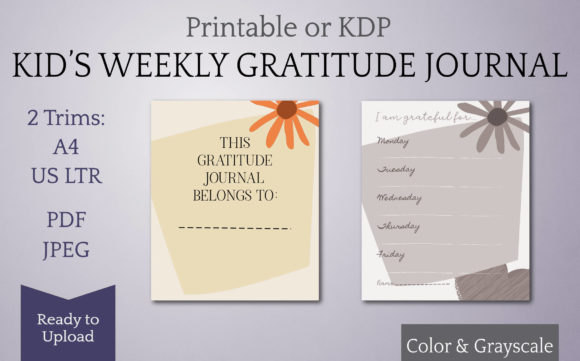
The primary differentiator of the Kids Gratitude Journal - KDP - Shapes is its visual scaffolding. Traditional lined journals can appear intimidating or monotonous to early writers or neurodivergent children who struggle with unstructured white space. By utilizing shapes as the container for text, this journal transforms the act of writing into a contained, manageable task. This design choice serves two practical purposes: it limits the volume of writing required, reducing performance anxiety, and it provides a visual boundary that helps children focus on a single positive thought rather than feeling overwhelmed by a blank page.
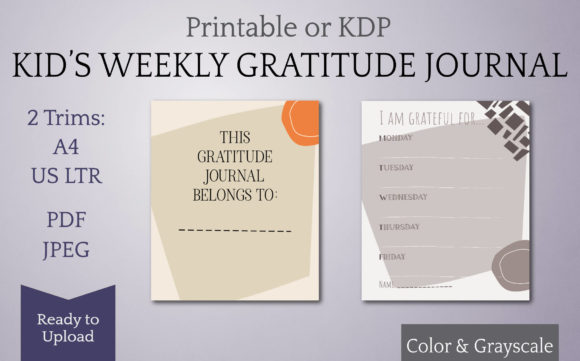
From a production standpoint, this interior is engineered specifically for the technical requirements of Amazon KDP. Many generic templates fail to account for gutter margins or bleed settings, leading to rejected uploads or poor print quality. This resource includes pre-formatted files in both US Letter and A4 sizes, ensuring that the content remains safely within the printable area. The inclusion of a "This journal belongs to" page adds immediate perceived value and ownership, which is a critical psychological component for children developing a consistent habit. For creators, this eliminates the hours typically spent adjusting margin guides and testing bleed parameters.
Comparing Formats: Weekly vs. Daily vs. One-Line Approaches
When selecting a gratitude tool, stakeholders must weigh the frequency of engagement against sustainability. The Kids Gratitude Journal - KDP - Shapes occupies a unique middle ground. While marketed with weekly tracking capabilities, the one-line format allows for flexible usage that daily journals cannot match.
- Daily Comprehensive Journals: These often require 5–10 minutes of dedicated time and multiple prompts. They are excellent for older children or therapeutic settings but frequently lead to burnout in younger users or busy households.
- Weekly Reflection Logs: These summarize an entire week in one sitting. While efficient, they rely on memory recall, which can be difficult for children under ten, potentially making the exercise feel like a test rather than a practice.
- One-Line Shape Journals: This format captures a snapshot of gratitude. It requires less than two minutes, making it sustainable during trying times or high-stress periods. The visual novelty of shapes maintains interest longer than standard lines, bridging the gap between activity book and reflective journal.
For homeschool environments or classrooms, the shape-based one-line format offers superior adaptability. Teachers can use it as a morning warm-up or a transition activity without consuming significant instructional time. Parents navigating challenging family transitions may find that the low barrier to entry keeps the practice alive when energy for deeper reflection is scarce.
Technical Considerations for KDP Publishers
For those using this as a base for commercial publishing, the technical specifications are as important as the content strategy. The Kids Gratitude Journal - KDP - Shapes package typically includes 110-page PDFs in both US Letter and A4 formats, along with JPEG options. This multi-format delivery is significant because international markets (often A4) and domestic US markets (Letter) have different consumer expectations regarding trim size.
Publishers should note that while the interior is ready-to-upload, success on KDP relies heavily on cover differentiation. Because interiors like this are non-exclusive or widely available, the cover art becomes the primary vehicle for branding and niche targeting. A generic cover will likely result in poor conversion rates regardless of the interior's quality. Furthermore, creators must verify current KDP bleed requirements before uploading, as platform specifications can change. While this template is designed with bleed in mind, running a digital proof through KDP’s previewer is a mandatory step to ensure no critical elements are trimmed during printing.
Assessing Fit: When Simplicity Is an Advantage
The decision to utilize a simplified, shape-driven journal should be based on the user's developmental stage and current emotional capacity. There are specific scenarios where the Kids Gratitude Journal - KDP - Shapes outperforms more robust alternatives.
Ideal Use Cases:
- Early Writers (Ages 4–7): Children still developing fine motor skills benefit from the defined boundaries of shapes, which act as guides for letter sizing and spacing.
- Trauma or Grief Support: During acute stress, cognitive load decreases. Complex journaling prompts can feel invalidating or impossible. A single line inside a friendly shape validates small wins without demanding emotional labor.
- Reluctant Journalers: Kids who resist traditional writing often respond better to visually distinct pages. The shape element gamifies the experience slightly, lowering resistance.
- Supplemental Classroom Tool: As a supplementary social-emotional learning (SEL) resource, it fits easily into existing curricula without requiring lesson plan overhauls.
Recognizing Limitations and Tradeoffs
No single resource solves every problem, and transparency regarding limitations is vital for informed decision-making. The minimalist nature of this journal is its greatest strength but also its primary constraint.
Limited Depth for Advanced Users: Older children (ages 10+) or those already established in mindfulness practices may find the one-line format restrictive. They may require guided prompts, mood tracking, or free-writing sections to process complex emotions effectively. In these cases, this journal might serve only as a starter tool or a supplementary quick-capture device rather than a primary resource.
Market Saturation Risks: For KDP publishers, the "gratitude journal" category is highly competitive. Using a pre-made interior like Kids Gratitude Journal - KDP - Shapes reduces production time but increases the risk of creating a commodity product. Without significant customization, unique cover design, or bundled value (such as companion activities or parent guides), it can be difficult to distinguish this listing from dozens of similar options. Publishers must evaluate whether they have the marketing capability to drive traffic to a standardized interior.
Non-Exclusivity: Depending on the licensing terms of the specific file purchased, other sellers may be using the identical interior. This means you cannot claim uniqueness regarding the internal content. Buyers looking for proprietary, exclusive designs for their brand may need to hire a custom illustrator or designer instead of utilizing pre-made templates.
Making the Final Selection
Choosing the right gratitude resource involves matching the tool to the current reality of the user or the strategic goals of the publisher. If the objective is to foster a sustainable, low-pressure habit in young children or to provide a gentle anchor during difficult seasons, the Kids Gratitude Journal - KDP - Shapes represents a highly effective, developmentally appropriate solution. Its emphasis on visual containment and brevity respects the limited attention spans and emotional bandwidth of its target demographic.
Conversely, if the goal is deep therapeutic processing, advanced creative writing, or building a premium, differentiated brand on KDP without additional modification, this specific format may be insufficient. Stakeholders should view this journal not as a universal cure-all, but as a specialized instrument for accessibility and consistency. By understanding both the pedagogical benefits of shape-based prompting and the commercial realities of KDP publishing, adults can make confident choices that genuinely support the well-being of children or the viability of their publishing portfolio.
Ultimately, the efficacy of any gratitude practice lies in its consistency. Tools that reduce friction and increase engagement—like shape-based one-line journals—often yield better long-term results than ambitious systems that are abandoned after two weeks. Whether for home, school, or business, prioritizing usability over complexity is frequently the deciding factor in successful implementation.