Evaluating the KDP Interior Dot Grid Paper Notebook for Self-Publishing
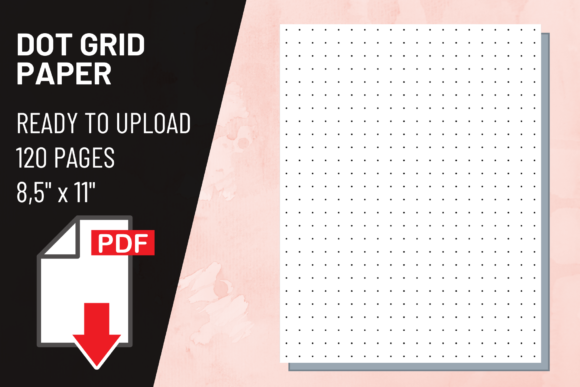
The KDP Interior Dot Grid Paper Notebook is a specialized digital asset designed for authors and publishers utilizing Amazon’s print-on-demand platform. Specifically formatted at 8.5″ x 11″, this interior template serves as the foundational content for low-content books aimed at journaling, sketching, and technical note-taking. When evaluating this resource, it is essential to understand that it is not merely a collection of dots but a pre-formatted production file intended to streamline the publishing workflow. The standard package typically includes a high-resolution PDF file at 300 DPI with bleed settings already configured, comprising 120 pages of consistent dot grid patterning.
For creators researching low-content publishing opportunities, understanding the functional specifications and market positioning of this specific interior is critical. The decision to utilize a pre-made dot grid interior versus creating one from scratch involves weighing time efficiency against customization needs. This evaluation explores the technical attributes, practical applications, and strategic considerations necessary to determine if this specific 8.5″ x 11″ format aligns with your publishing goals.
Technical Specifications and Print Quality Standards
The primary value proposition of a professional KDP interior lies in its adherence to printing standards. When assessing a dot grid paper notebook KDP interior, the resolution and trim size are the most significant technical factors. The 8.5″ x 11″ dimension is the industry standard for letter-size documents in North America, making it a versatile choice for academic, professional, and personal use cases. This size offers ample surface area for detailed diagrams or extensive journaling while remaining compatible with standard shelving and carrying cases.
Resolution is non-negotiable in print-on-demand publishing. The inclusion of a 300 DPI PDF file ensures that the dot grid appears crisp and clean on physical paper. Lower resolution files often result in pixelated or blurry dots, which can degrade the user experience and lead to negative reviews. Furthermore, the presence of bleed in the file specification indicates that the grid pattern extends to the edge of the page. This is a crucial distinction; interiors without bleed require significant margins, whereas bleed-enabled files allow for edge-to-edge printing, providing a more polished, professional aesthetic that mimics traditionally manufactured notebooks.
The 120-page count represents a strategic balance between perceived value and production cost. In the KDP ecosystem, page count directly influences printing costs and minimum list prices. A 120-page notebook is substantial enough to be marketed as a premium journal or workbook without pushing the production cost so high that competitive pricing becomes impossible. For evaluators, this page count suggests a product positioned for medium-term use, such as a quarterly planner or a project-specific logbook.
Functional Benefits and User Applications
Dot grid paper occupies a unique niche between lined and blank paper, offering structure without restriction. This hybrid nature makes the KDP Interior Dot Grid Paper Notebook particularly suitable for specific user demographics. Bullet journalists, for example, prefer dot grids because the points serve as guides for drawing straight lines and boxes while remaining unobtrusive during freeform writing. Engineers, architects, and designers also favor this format for sketching schematics where scale and proportion matter, but rigid graph lines might interfere with the final presentation.
From a publishing perspective, the neutrality of the dot grid allows for broader marketing flexibility. Unlike lined paper, which is strictly associated with writing, or blank paper, which is associated with art, dot grid interiors can be positioned across multiple categories. Publishers can create distinct covers targeting students, fitness trackers, recipe organizers, or coding logs, all using the same underlying 8.5″ x 11″ interior file. This versatility reduces the need to maintain multiple interior variations, simplifying inventory management for those managing large portfolios of low-content books.
Tradeoffs and Strategic Considerations
While pre-formatted interiors offer significant convenience, they come with inherent tradeoffs that must be evaluated. The most prominent limitation is the lack of differentiation. Because many publishers utilize identical stock interiors, the internal content of your book may be indistinguishable from competitors. In a saturated marketplace, relying solely on a generic KDP interior dot grid paper notebook places the entire burden of differentiation on the cover design and metadata strategy. If the interior offers no unique value add—such as proprietary headers, index pages, or custom dot spacing—the product competes primarily on price and cover aesthetics.
Another consideration is the rigidity of the 120-page format. While this length works for many applications, it may not suit every niche. Users seeking pocket-sized field notes will find 8.5″ x 11″ too cumbersome, while those wanting comprehensive year-long journals may find 120 pages insufficient. Evaluators must verify that this specific size and length match the search intent of their target audience. Analyzing bestseller lists in your intended sub-niche can reveal whether 8.5″ x 11″ is the expected standard or an outlier.
Additionally, users should consider the opacity of the paper. While the digital file may be perfect, KDP’s standard white paper has known limitations regarding ink bleed-through. Heavy dot saturation in the PDF file can exacerbate this issue. High-quality interiors often use lighter gray dots rather than solid black to mitigate show-through. When evaluating a specific package, inspecting the dot weight and color density is advisable to ensure the physical product meets user expectations for double-sided usability.
Determining Fit: When to Use Pre-Made vs. Custom
Deciding whether to acquire this specific KDP interior depends largely on your current stage in the publishing journey and your technical capabilities. The 8.5″ x 11″ dot grid package is an strong fit for publishers who prioritize speed to market. If you are testing a new niche or validating demand for a specific cover style, using a ready-to-upload 300 DPI file eliminates hours of layout work. It removes technical barriers related to margin calculations, gutter safety zones, and bleed setup, allowing you to focus entirely on keyword research and cover design.
This format is also appropriate for creators who lack graphic design software proficiency. Generating a flawless 120-page grid with precise margins requires intermediate skills in tools like Adobe InDesign or Affinity Publisher. For those without these skills, purchasing a verified, print-ready file is often more cost-effective than hiring a designer or spending weeks learning layout principles. The consistency of a professionally formatted interior also reduces the risk of file rejection during the KDP upload process.
Conversely, alternatives may be worth considering if you are building a long-term brand identity. If your goal is to create a recognizable series where the interior experience is part of the brand promise, a generic stock interior may undermine your efforts. In such cases, investing in custom interior design allows for the integration of branded elements, unique dot spacing (e.g., 4mm vs. 5mm), or specialized sections that add genuine utility. Similarly, if you are targeting international markets where A4 is the standard over US Letter, an 8.5″ x 11″ interior would be a poor fit, necessitating a different size specification.
Final Evaluation Criteria
When selecting a KDP Interior Dot Grid Paper Notebook, treat the purchase as a business decision rather than a simple asset acquisition. Verify that the file includes both the interior PDF and any necessary source files if future modifications are anticipated. Confirm that the bleed settings match current KDP specifications, as platform requirements can evolve. Assess whether the 120-page count at 8.5″ x 11″ aligns with the pricing strategy required to achieve your royalty targets.
Ultimately, the suitability of this interior hinges on alignment between the product specifications and market demand. For publishers seeking a reliable, standard-compliant foundation for general-purpose dot grid notebooks, this package offers a practical solution. However, success in low-content publishing increasingly depends on specificity and quality. Evaluators should view this interior as a baseline component—one that solves technical formatting challenges effectively but requires strategic external differentiation to succeed in a competitive marketplace.