KDP Quit Smoking Tracker Interior: A Practical Tool for Recovery and Publishing
Navigating the journey to becoming smoke-free requires more than just willpower; it demands structure, self-awareness, and a tangible way to measure progress. The KDP Quit Smoking Tracker Interior serves as both a functional recovery journal for individuals and a versatile publishing asset for creators. At its core, this 115-page resource is designed to bridge the gap between abstract intention and daily action. For those attempting to quit, it provides a structured framework to log triggers and celebrate milestones. For low-content book publishers, it offers a professionally formatted, editable template that streamlines the creation of niche health journals.
Structuring Daily Accountability Through Specific Tracking Metrics
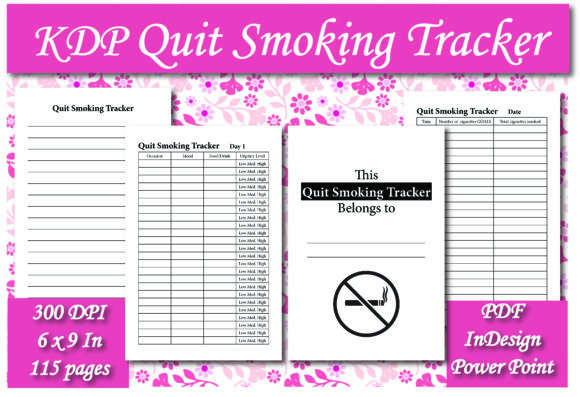
The most effective cessation tools move beyond simple calendar marking. This interior distinguishes itself by integrating specific behavioral data points that help users identify patterns rather than just counting days. The inclusion of fields for Time, Number of Cigarettes, and Total Cigarettes Smoked creates a quantitative baseline. However, the qualitative metrics are where real insight emerges. By tracking Occasion, Mood, Food, Drink, and Urgency Level, users can correlate their cravings with environmental and emotional contexts.
Consider a user who consistently logs high urgency levels after meals or when consuming coffee. Over the course of the 50-day tracking period, this data transforms from isolated entries into actionable intelligence. They might realize that their morning cigarette is tied more to the ritual of coffee than nicotine addiction itself, prompting a switch to tea or a change in morning routine. This level of granular tracking supports Cognitive Behavioral Therapy (CBT) techniques often recommended in cessation programs, making the journal a complementary tool to professional medical advice.
The 50-Day Framework and Goal Setting Architecture
Fifty days is a strategic duration for habit formation. It extends beyond the initial acute withdrawal phase (typically 3–4 weeks) and pushes into the psychological adjustment period where relapse risk remains significant. The interior dedicates specific sections to GOALS, allowing users to set micro-objectives alongside their daily logging. This prevents the "all-or-nothing" mentality that often derails recovery efforts.
The layout includes dedicated space for Lined Pages Notes, which serves multiple purposes. In early recovery, these pages often function as a distraction technique—a place to write out frustrations instead of acting on them. Later, they become a repository for reflection, documenting physical improvements like better breathing or increased energy. For publishers, these lined sections add perceived value to the book, increasing the page count to a substantial 115 pages without requiring complex graphic design, thereby improving the royalty potential on Amazon KDP.
Customization Capabilities for Publishers and Coaches
One of the primary advantages of acquiring this specific KDP Quit Smoking Tracker Interior is the inclusion of source files. The pack contains InDesign and PowerPoint Presentation files, alongside a print-ready PDF. This flexibility is crucial for different types of users in the health and wellness publishing space.
- For KDP Publishers: The editable files allow for rapid differentiation. You can modify the cover art, adjust the font to match your brand aesthetic, or add a personalized introduction page. This prevents your book from looking identical to other generic trackers in the marketplace.
- For Smoking Cessation Coaches: Professionals can customize the "Goals" section to align with their specific coaching methodology. Adding a logo, contact information, or proprietary affirmations turns a generic tracker into a branded client resource.
- For Support Groups: Community leaders can adapt the "This Quit Smoking Tracker Belongs to" page to include group names or meeting schedules, creating a cohesive tool for collective accountability.
The availability of PowerPoint files is particularly noteworthy for creators who may not have access to Adobe InDesign. While InDesign is the industry standard for print layout, PowerPoint offers a lower barrier to entry for making text edits or rearranging simple elements. This ensures that the asset remains accessible regardless of technical proficiency, while still delivering a professional 6 x 9 inch trim size output suitable for commercial printing.
Real-World Scenarios and User Applications
Understanding how this interior functions across different demographics highlights its versatility. A 25-year-old social smoker trying to quit before a wedding will utilize the Occasion and Drink trackers heavily to navigate event-related triggers. Conversely, a 45-year-old long-term smoker focusing on health restoration may prioritize the Mood and Notes sections to process the emotional void left by nicotine. The interior’s neutral, functional design accommodates both approaches without alienating either user type.
In a clinical or therapeutic setting, practitioners often struggle with patient compliance regarding homework or journaling. A pre-formatted 6 x 9 inch journal feels less intimidating than a blank notebook. The structured prompts reduce the cognitive load required to start writing. When a patient brings this tracker to an appointment, the therapist gains immediate visibility into the week’s challenges, making sessions more productive and data-driven.
Technical Considerations and Best Practices
Before uploading or printing this KDP Quit Smoking Tracker Interior, several practical considerations ensure optimal results. The 6 x 9 inch size is the industry sweet spot for journals—it is portable enough to carry in a bag or large pocket but offers sufficient writing space for detailed entries. When preparing the file for KDP, always verify that margins meet current platform requirements, especially if you modify the InDesign or PowerPoint templates. Changing fonts or adding graphics can sometimes shift text blocks, so a thorough proof review is essential.
Paper choice also impacts the user experience. If using this for personal printing or via KDP, standard white paper is generally preferred over cream for trackers, as it provides higher contrast for handwriting and makes charts easier to read. Users should be aware that gel pens or heavy markers may bleed through standard 55# or 60# book paper; suggesting ballpoint or pencil use in the book’s introduction can prevent frustration.
Limitations and Complementary Strategies
While comprehensive, this tracker is a monitoring tool, not a medical intervention. It excels at awareness and pattern recognition but does not replace Nicotine Replacement Therapy (NRT), medication, or counseling. Publishers and coaches should clearly communicate this distinction. The tracker works best as part of a broader ecosystem of support. For example, pairing the journal with a digital app for real-time craving management creates a hybrid approach that covers both retrospective analysis and immediate intervention.
Additionally, the 50-day structure, while robust, may need supplementation for long-term maintenance. Users who complete the journal may require a second volume or a transition to a less intensive maintenance log. Publishers can capitalize on this by creating a series or offering a "Year One" companion journal, using the same editable assets to maintain brand consistency.
Maximizing Value Through Intentional Design
The true value of this KDP Quit Smoking Tracker Interior lies in its balance of structure and adaptability. For the end-user, it transforms the chaotic experience of quitting into a manageable, documented process. The specific combination of time-stamping, trigger identification, and reflective note-taking addresses the multifaceted nature of addiction. For the creator, the inclusion of editable source files removes the technical bottleneck of product development, allowing focus to shift toward marketing and audience building.
Whether used as a personal accountability partner or a scalable digital product, this 115-page resource provides a solid foundation. Success depends on consistent engagement with the material and, for publishers, thoughtful customization that speaks directly to the needs of their specific audience segment. By leveraging the provided InDesign and PowerPoint files, creators can ensure their offering stands out in a crowded marketplace while delivering genuine utility to those navigating one of life’s most challenging health transitions.