Evaluating the Goal Tracker KDP Template for Low Content Publishing
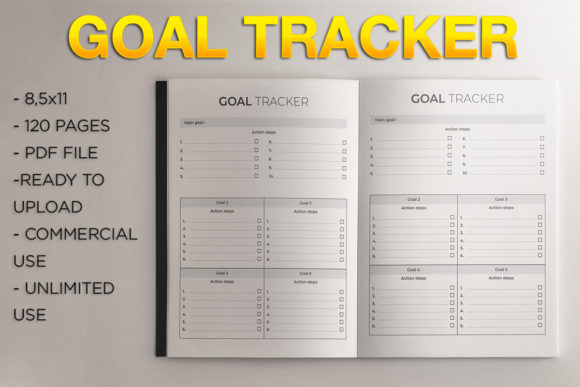
Selecting the right interior file is often the most critical technical decision in low-content publishing. For creators focusing on productivity and self-improvement niches, a Goal Tracker KDP Template offers a structured foundation that balances user utility with printing safety. This specific template format—an 8.5″ x 11″ no-bleed PDF containing 120 pages—addresses common production hurdles while providing a standardized layout for end-users. Understanding the distinct characteristics of this pre-formatted resource helps publishers determine if it aligns with their portfolio strategy or if a custom design would better serve their target audience.
Understanding the No-Bleed Specification
The defining feature of this Goal Tracker KDP Template is the "no bleed" designation. In print-on-demand terminology, bleed refers to artwork or background colors that extend beyond the trim edge of the page. While full-bleed designs offer a premium aesthetic, they introduce significant complexity during the upload process. Amazon’s automated review systems frequently flag bleed-related errors, resulting in rejected files or delayed publication times.
This template eliminates that variable entirely. By keeping all content within the safe zone margins, the 8.5″ x 11″ no-bleed format ensures compatibility with standard white paper stock without requiring gutter adjustments or margin recalculations. For publishers managing multiple titles, this specification reduces the cognitive load associated with file preparation. The tradeoff is visual; the pages will have a uniform white border. However, for functional tools like goal trackers where clarity and writability are paramount, this constraint often enhances usability rather than detracting from value.
Page Count and Structural Integrity
The 120-page count included in this PDF represents a strategic middle ground in book manufacturing. Spine width calculations for paperback books depend heavily on page count and paper type. At 120 pages, the book achieves enough thickness to display a readable spine text on the shelf, distinguishing it from thinner pamphlets or journals that may appear insubstantial. Conversely, it avoids the higher printing costs associated with 200+ page interiors, allowing for a more competitive retail price point while maintaining healthy royalty margins.
This length also correlates well with user behavior. A 120-page goal tracker typically supports quarterly planning or specific project tracking without overwhelming the user. Heavier volumes can sometimes discourage consistent use due to their bulk, whereas this size remains portable and approachable for daily logging.
Comparing Pre-Made Templates Versus Custom Design
Publishers frequently weigh the benefits of ready-made assets against creating proprietary interiors. Both approaches have merit depending on business goals, technical skills, and time availability.
Efficiency and Technical Reliability
The primary advantage of utilizing a pre-formatted Goal Tracker KDP Template is speed to market. Creating a 120-page document with consistent headers, footers, and alignment guides requires proficiency in software like Adobe InDesign or Affinity Publisher. Even experienced designers spend hours verifying margins and export settings. This template provides an instant download PDF that has already been validated for the 8.5″ x 11″ trim size. For publishers testing new keywords or expanding into the productivity niche, this allows for rapid iteration without upfront design investment.
Furthermore, technical reliability is a significant factor. Margins on KDP can shift based on page count and binding type. A verified template removes the risk of content being cut off during trimming, a common issue when designing custom interiors without extensive print proofing.
Uniqueness and Market Differentiation
The limitation of shared templates is potential market saturation. If multiple publishers use the identical Goal Tracker KDP Template without modification, customers may encounter duplicate listings. To mitigate this, successful publishers often treat the template as a base layer. Adding unique cover art, customizing the title page, or inserting introductory content can differentiate the final product. Publishers seeking to build a recognizable brand identity may eventually need to transition to custom interiors, but this template serves as an effective entry point or supplementary asset.
Evaluating Format Suitability for Productivity Niches
Not all goal tracking methodologies fit every page size. The 8.5″ x 11″ dimension is the industry standard for North American letter-size paper, making it familiar to users accustomed to office supplies and academic planners. This size offers ample horizontal space for multi-column layouts, such as breaking down annual goals into quarterly milestones or weekly action items.
Comparison with Alternative Sizes
- 6″ x 9″ Portables: Smaller formats excel at portability and habit tracking but often lack space for detailed project breakdowns. Users who need to write extensively or visualize complex timelines may find 6x9 restrictive.
- A4 International Standard: While similar to 8.5x11, A4 is narrower and taller. Choosing the US Letter size (8.5x11) targets the North American market specifically, which dominates English-language KDP sales for productivity tools.
- Square Formats: Square books offer a modern aesthetic but are less intuitive for tabular data and list-based goal tracking. The rectangular aspect ratio of this template aligns better with traditional writing patterns.
When evaluating whether this specific size fits your niche, consider the end-user's environment. Professionals using these trackers at desks generally prefer 8.5″ x 11″ for compatibility with folders and filing systems. Travelers or commuters might prioritize smaller alternatives.
Strategic Implementation and Upload Best Practices
Maximizing the value of this template requires correct configuration during the KDP setup process. Even a perfectly formatted PDF can fail if metadata settings contradict the file specifications.
- Trim Size Selection: You must select exactly 8.5″ x 11″. Selecting a close variant like 8.25″ x 11″ will trigger margin errors because the safe zones differ.
- Bleed Setting: Explicitly choose "No Bleed." Selecting "Bleed" for this file will cause the system to expect extended artwork, resulting in rejection.
- Cover Calculation: Use the KDP cover calculator with the "No Bleed" interior setting. The spine width calculation differs between bleed and no-bleed interiors, even at the same page count.
- File Verification: Always launch the previewer before approving. Check the first few and last few pages specifically, as these are most susceptible to shifting.
When to Choose Alternatives Instead
While this Goal Tracker KDP Template solves many logistical challenges, it is not universally optimal. Publishers should consider alternative solutions in specific scenarios:
- Full-Color Interiors: This template is optimized for black-and-white printing. If your goal tracking method relies on color-coding or visual charts, standard color printing costs may erode margins, necessitating a different pricing strategy or format.
- Niche-Specific Frameworks: Generic goal trackers work for broad audiences. However, specialized niches (e.g., fitness periodization, academic research planning, financial debt snowballs) often require custom tables and prompts that a general template cannot provide.
- Premium Brand Positioning: If positioning a book as a high-ticket coaching companion, customers expect bespoke design elements. A recognizable template interior may conflict with premium pricing expectations.
Assessing Long-Term Portfolio Value
Incorporating standardized assets like this 120-page no-bleed template supports a diversified publishing strategy. It functions effectively as a baseline product for keyword research, allowing publishers to validate demand before investing in custom development. The low barrier to entry enables testing of various sub-niches within the goal-setting category—from career advancement to personal wellness—without significant sunk costs.
However, sustainable growth typically involves evolving beyond sole reliance on shared resources. Successful publishers often use this template to generate initial cash flow and market data, then reinvest those insights into developing proprietary interiors that address specific gaps identified through customer reviews or sales performance. The template is best viewed as a component of a broader ecosystem rather than a complete solution.
Ultimately, the decision hinges on balancing efficiency with differentiation. For publishers prioritizing technical safety, rapid deployment, and functional utility in the North American market, this Goal Tracker KDP Template provides a reliable infrastructure. Those prioritizing unique branding or specialized content structures may use it as a starting reference while planning more customized alternatives. Evaluating these factors against individual business objectives ensures the selected resource supports both immediate publishing needs and long-term portfolio health.