Evaluating the Travel Budget L KDP Template for Low-Content Publishing
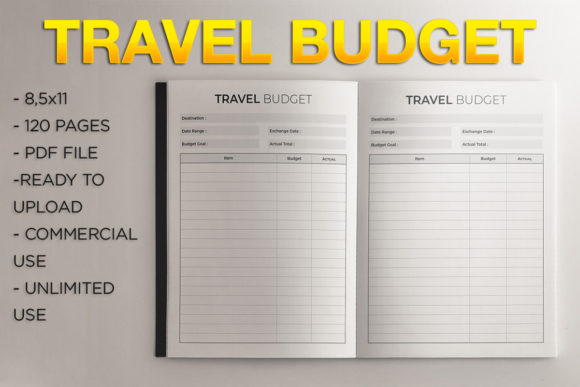
The Travel Budget L KDP Template is a specialized digital asset designed specifically for Amazon Kindle Direct Publishing (KDP) creators focusing on the low-content and no-content book niche. This product serves as a pre-formatted interior file that allows publishers to create travel finance trackers without the need for graphic design software or extensive formatting knowledge. Sized at 8.5" x 11" with a no-bleed configuration, this template addresses specific technical requirements of the KDP platform while targeting a distinct consumer need: organized financial planning for travelers.
For individuals researching low-content publishing opportunities or seeking to expand an existing portfolio, understanding the functional utility and market positioning of this template is essential. It represents a balance between technical compliance and user experience, offering a 120-page structure ready for immediate upload. However, like any pre-made asset, it requires careful evaluation against business goals, market saturation levels, and quality standards to determine if it aligns with a sustainable publishing strategy.
Understanding the Product Specifications and Utility
The primary value proposition of the Travel Budget L KDP Template lies in its technical readiness. The file is delivered as a single PDF containing 120 pages of structured layouts. The 8.5" x 11" dimension is significant because it provides ample writing space for users tracking expenses, currency conversions, and savings goals. Unlike smaller trim sizes often used for journals, this larger format accommodates detailed tables and notes sections that are critical for budget tracking functionality.
The "no bleed" designation is a crucial technical specification. In KDP terminology, no bleed means that all content, including borders and text, must remain within the safe zone margins, leaving a white border around the page edge. This simplifies the printing process and reduces the risk of rejection due to margin errors. For publishers who have previously struggled with bleed settings or trim size adjustments, this template eliminates a common friction point in the upload workflow. The 120-page count also hits a sweet spot for perceived value; it is substantial enough to justify a higher price point than a standard notebook but remains cost-effective to print via KDP’s paperback royalty structure.
Strategic Reasons for Adoption
Publishers typically evaluate this type of template based on time efficiency and niche relevance. Creating a functional budget tracker from scratch requires understanding both accounting principles and book layout design. The Travel Budget L KDP Template bridges this gap by providing a proven layout structure. For new publishers, this reduces the learning curve associated with creating usable interiors. For experienced publishers, it serves as a baseline for testing new keywords or sub-niches without investing dozens of hours in custom design.
Furthermore, the travel budget niche offers evergreen potential. Unlike seasonal trends, travel planning occurs year-round, and financial organization is a perpetual pain point for travelers. By utilizing a dedicated template rather than a generic lined journal, publishers can target long-tail keywords such as "travel expense tracker," "vacation budget planner," or "backpacking finance log." Specificity in interior design directly correlates to conversion rates, as customers are increasingly discerning about the actual usability of low-content books.
Benefits and Competitive Advantages
- Technical Compliance: The pre-set margins and no-bleed format significantly reduce the likelihood of KDP rejection, streamlining the path to publication.
- User-Centric Design: The 8.5" x 11" size allows for complex tracking fields that would be illegible in smaller formats, enhancing the end-user experience.
- Scalability: As an instant download PDF, there is no inventory management or shipping logistics, allowing for rapid portfolio expansion.
- Niche Focus: Moves beyond saturated general journal markets into functional utility, which often commands better customer loyalty and reviews.
Tradeoffs and Critical Considerations
Despite the advantages, relying on a pre-made template like the Travel Budget L KDP Template involves inherent tradeoffs. The most significant concern is market differentiation. Because templates are accessible to multiple buyers, there is a risk of duplicate content appearing in search results. Amazon’s algorithms may suppress listings that appear identical to others. Publishers must mitigate this by creating unique, high-quality covers and writing distinct metadata descriptions. The interior is merely one component of the product; the cover and marketing copy are what ultimately drive sales.
Additionally, the no-bleed constraint limits aesthetic flexibility. Designs cannot extend to the very edge of the paper, which some consumers associate with premium quality. Publishers must decide whether their target audience prioritizes functional whitespace over full-page artistic immersion. There is also the consideration of customization limits. While the PDF is ready to use, modifying the internal layout requires vector editing software. If a publisher wishes to add branding, change fonts, or adjust column widths, they cannot simply edit the provided PDF; they would need the source file or advanced editing skills, which negates some of the convenience factor.
Situational Fit: When This Template Aligns with Goals
This template is particularly well-suited for publishers building a functional utility brand. If your catalog focuses on planners, organizers, and practical tools, the Travel Budget L KDP Template integrates seamlessly. It is also appropriate for those conducting market research. Uploading a standardized template allows you to test demand for travel finance topics with minimal upfront investment. If the book sells, it validates the niche for future custom designs. If it does not, the loss is limited to the cost of the template and upload time.
Newcomers to KDP will also find value in the educational aspect of using a correctly formatted file. Analyzing how the margins, headers, and table structures are set up provides a practical reference for future original creations. It serves as a benchmark for professional standards in low-content publishing.
When to Consider Alternatives
Conversely, this template may not be the right choice for publishers aiming for complete exclusivity or high-art aesthetics. If your brand identity relies on unique, hand-drawn illustrations or proprietary tracking systems, a stock template could dilute your value proposition. In such cases, hiring a freelance designer or learning Adobe InDesign/Affinity Publisher would yield better long-term assets.
Additionally, if you intend to sell digital downloads on platforms like Etsy alongside KDP, verify the licensing terms of the template. Some KDP templates restrict commercial use outside of Amazon or require significant modification before resale elsewhere. Publishers focused on multi-platform income streams should carefully review usage rights to avoid intellectual property conflicts. Finally, if your research indicates that the 8.5" x 11" size is too large for your specific sub-niche (e.g., pocket-sized travel logs), forcing this template into an incompatible market will result in poor user satisfaction and negative reviews.
Making an Informed Decision
Selecting the Travel Budget L KDP Template should be a calculated business decision rather than an impulse purchase. Evaluate your current portfolio gaps, assess the competition in the travel budget keyword cluster, and honestly appraise your ability to create a differentiated cover. The template provides a solid foundation and removes technical barriers, but success in low-content publishing ultimately depends on how well the final product meets specific customer needs. By weighing the convenience of a no-bleed, pre-formatted interior against the necessity for external differentiation, publishers can determine if this asset supports their broader strategic objectives.