KDP Finance Tracker: A Strategic System for Publishing Profitability
Managing the financial health of a self-publishing business requires more than a simple ledger; it demands a system that bridges the gap between creative output and fiscal responsibility. The KDP Finance Tracker serves as this critical infrastructure, offering a comprehensive yet accessible framework designed specifically for Amazon KDP publishers, freelancers, and digital entrepreneurs. Unlike generic accounting software that often obscures the nuances of royalty-based income, this tool provides a tactile, structured environment to monitor cash flow, manage debt, and visualize long-term growth. Available in a versatile 6x9 inch PDF interior with editable PPTX and Keynote templates, it allows users to maintain precise records without the overhead of complex subscriptions or steep learning curves.
Strategic Alignment of Financial Data and Business Goals
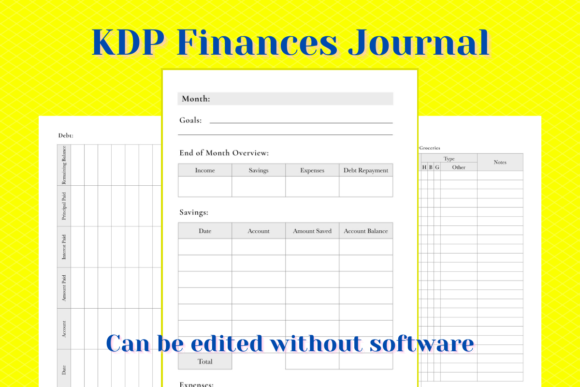
The primary strategic value of the KDP Finance Tracker lies in its ability to force alignment between daily spending and annual objectives. Many publishers operate with a disconnect between their marketing budgets and actual royalty returns. By utilizing the dedicated monthly goal sections and end-of-month overviews, creators can move beyond reactive bookkeeping to proactive financial planning. The first page of each monthly spread is engineered to capture total income, expenses, savings, and debt repayments in a single view. This consolidation prevents the common error of viewing revenue in isolation from the costs required to generate it.
For professionals aged 20 to 50 balancing publishing with other careers or business ventures, this alignment is essential. The tracker includes a comprehensive savings table with seven distinct entries, allowing for granular tracking of emergency funds, ad spend reserves, or future publication budgets. When you categorize expenses into housing, bills, groceries, and business-specific costs immediately upon entry, you create a real-time feedback loop. This immediate categorization supports better decision-making regarding ad spend scaling or outsourcing. Instead of waiting for a quarterly tax review to realize margins are thinning, the visual layout of the KDP Finance Tracker highlights trends as they emerge, enabling agile adjustments to publishing strategies.
Optimizing Debt Management and Cash Flow Visibility
Cash flow is the lifeblood of any independent publishing operation, yet debt servicing often remains opaque in standard spreadsheets. This tracker addresses that gap with a specialized approach. The second page of every monthly section features a large table dedicated exclusively to debt repayments, accommodating ten separate entries. Crucially, this table requires users to record not just the amount paid, but also the interest paid, principal paid, and remaining balance. This level of detail transforms debt tracking from a passive chore into an active wealth-building strategy.
Understanding the ratio of interest to principal is vital for marketers and creators who may have leveraged credit cards for inventory, ads, or education. By seeing exactly how much of a payment is eroding the actual debt versus servicing interest, publishers can make informed decisions about which balances to prioritize. Furthermore, the yearly overview spreads provide a macro perspective on debt reduction alongside savings accumulation. With space to track amounts saved, total savings to date, and debt metrics across two pages per year, users can correlate periods of high publishing output with financial milestones. This correlation helps identify which books or series are true profit drivers versus those that merely generate gross revenue while consuming capital through hidden financing costs.
Leveraging Editable Templates for Brand Consistency
Operational efficiency extends to how tools integrate with your existing brand identity. The inclusion of PPTX and Keynote templates ensures the KDP Finance Tracker is not a static document but a customizable asset. The PPTX file’s compatibility with Google Slides removes software barriers, allowing edits from any device. This flexibility is strategically important for educators, bloggers, and small business owners who need to adapt the tracker for specific projects or client demonstrations.
The template structure supports professional positioning through intentional design elements:
- Title Page: Establishes immediate context and organizational clarity.
- Brand Identity Page: A dedicated blank page for adding your logo, website, and social media handles reinforces brand consistency, which is particularly useful if sharing financial reports with partners, accountants, or investors.
- Customizable Illustration Page: The option to keep, delete, or replace the finance illustration allows for personalization. Replacing generic art with a mission statement or quarterly quote can reinforce mindset and focus during monthly reviews.
This customization capability ensures the tracker feels like a proprietary business tool rather than a generic form. For freelancers and agencies managing multiple KDP accounts, creating distinct branded versions reduces cognitive load and minimizes administrative errors during data entry.
Intentional Usage: Avoiding Administrative Drift
A finance tracker is only as effective as the intention behind its use. Relying on the KDP Finance Tracker without clear goals risks turning valuable planning time into mere data entry. To extract maximum value, users must approach the 96-page layout (covering 12 months via 4 pages per month) as a decision-making instrument rather than a historical archive. Pages three and four of each month are dedicated to detailed expense logging, capturing dates, amounts, and types. While comprehensive, this granularity should serve analysis, not just compliance.
Consider the risk of tracking without context. Recording every expense is necessary, but insufficient. Without reviewing the "End of Month Overview" against the initial goals set on Page 1, the data remains inert. Strategic practitioners use the transition between months to conduct a variance analysis. Did ad spend exceed projections? Did royalties meet the threshold required to cover fixed costs? The physical or digital act of writing these figures prompts deeper cognitive processing than automated bank feeds. This deliberate friction is a feature, not a bug; it forces engagement with the business's reality.
Before adopting this system, assess your current volume. The 10-entry limit for debt and 7-entry limit for savings tables are designed for focused tracking. If your operation involves hundreds of micro-transactions monthly, this tool works best as a summary ledger fed by automated software, rather than a primary transaction recorder. However, for most independent publishers and solopreneurs, these limits encourage batching and categorization, reducing noise and highlighting signal.
Practical Planning and Decision-Making Framework
Effective use of the KDP Finance Tracker requires establishing a rhythm that aligns with publishing cycles. Book launches, ad campaigns, and seasonal sales events create irregular cash flows that standard monthly budgeting often misses. Use the yearly overview spreads to map out anticipated high-expense periods against projected royalty lags. This forward-looking application turns the tracker into a forecasting model.
When planning for the upcoming quarter, utilize the blank branding page or the customizable illustration page to anchor your financial targets to broader business outcomes. For example, a creator aiming to transition from part-time to full-time publishing might use the savings table to track a specific "runway fund." Seeing this fund grow visually across the monthly spreads provides tangible validation of progress that abstract bank balances cannot offer. Similarly, marketers testing new ad platforms can use the expense category breakdowns to isolate experimental spend from core operational costs, ensuring that innovation does not jeopardize baseline profitability.
Communication with stakeholders also benefits from this structured approach. When discussing finances with a spouse, business partner, or tax professional, the organized layout of the KDP Finance Tracker conveys competence and control. The separation of housing and personal bills from business expenses within the monthly logs simplifies tax preparation and clarifies the true net income of the publishing venture. This clarity builds trust and facilitates more productive conversations about reinvestment and growth.
Long-Term Value Through Structured Reflection
Sustainability in self-publishing depends on learning from past performance. The 6x9 format is portable enough for regular review sessions away from the computer, encouraging reflection in environments conducive to strategic thinking. The comprehensive nature of the monthly pages—combining goals, summaries, savings, debt, and detailed expenses—creates a self-contained case study for each month of the year.
Over time, these completed pages form a rich dataset for identifying patterns. You may discover that certain expense categories consistently overrun budgets during launch months, or that debt repayment accelerates only after specific royalty thresholds are met. These insights are the foundation of operational maturity. The KDP Finance Tracker facilitates this longitudinal analysis by maintaining a consistent format across all 12 months. Consistency reduces the mental energy required to navigate the tool, freeing up cognitive resources for interpreting the data.
Ultimately, this tool supports the transition from hobbyist to professional operator. It imposes a discipline that mirrors the rigor of traditional publishing houses while retaining the flexibility needed by independent creators. Whether used in its original PDF form for printing or customized via Google Slides for digital integration, the KDP Finance Tracker provides the structural scaffolding necessary to build a resilient, profitable publishing business. Success comes not from the tool itself, but from the strategic habits it cultivates: regular review, honest assessment of debt, clear goal setting, and the persistent alignment of financial resources with creative ambitions.