Evaluating the 8.5x11 Notary Public Logbook Template for KDP Publishing
Selecting the correct interior manuscript is a foundational step for anyone entering the low-content publishing niche on Amazon KDP. For creators focusing on professional documentation tools, the 8.5x11 Notary Public Logbook Template serves as a standardized framework designed to meet specific industry and platform requirements. This template provides a pre-formatted structure for recording notarial acts, optimized for print-on-demand production. Understanding the technical specifications, customization potential, and practical applications of this resource is essential for determining whether it aligns with your publishing strategy or business needs.
Defining the Template Structure and Specifications
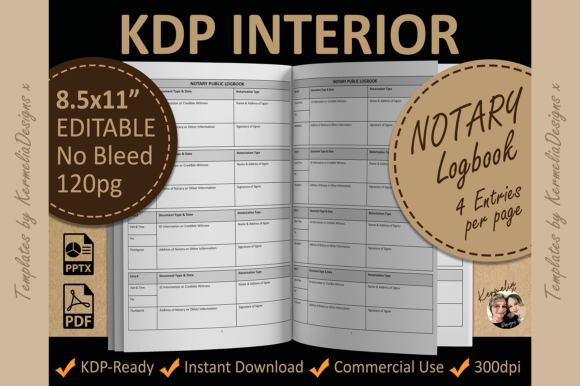
The 8.5x11 Notary Public Logbook Template is a digital asset package intended for use in creating physical journals. It is specifically engineered for the United States standard letter size (8.5 x 11 inches) with no bleed settings. This dimension is significant because it offers maximum writing space compared to smaller trim sizes like 6x9, making it preferable for detailed record-keeping where legibility and data density are priorities.
The interior layout typically includes 120 pages, which translates to 60 sheets when printed double-sided. A critical feature of this specific configuration is the inclusion of four entry tables per page. This density allows for up to 472 total entries within a single volume, balancing portability with high utility. The pagination is sequential, ensuring that records can be referenced accurately—a vital compliance aspect for legal documentation. Furthermore, the file is prepared at 300 DPI resolution to ensure crisp printing quality, adhering strictly to Amazon KDP guidelines regarding inside gutters and outside margins to prevent text cutoff during binding.
Strategic Value for KDP Publishers
For entrepreneurs researching low-content book opportunities, this template addresses several technical hurdles associated with self-publishing. Creating a compliant logbook from scratch requires precise knowledge of margin safety zones, gutter adjustments based on page count, and table formatting that remains consistent across hundreds of pages. By utilizing a tested template, publishers mitigate the risk of rejection during the KDP quality check process.
The inclusion of an editable PPTX file alongside the ready-to-upload PDF adds a layer of strategic flexibility. While the PDF allows for immediate publication, the PowerPoint source file enables differentiation. In a saturated market, simply uploading a generic interior may result in low visibility. The ability to edit the master slides allows publishers to modify fonts, adjust column widths, add branding elements, or include state-specific disclaimer language. This customization capability transforms a commodity product into a specialized tool tailored to specific regional regulations or aesthetic preferences.
Functional Design and User Experience Considerations
When evaluating this template, one must consider the end-user experience. The design includes functional front matter that enhances professionalism. The first page features a "This Book Belongs To" ownership box, establishing clear custody of the legal record. The second page is designated for Notes or a Table of Contents, providing organizational utility before the actual logging begins on page three. These structural elements demonstrate an understanding of how notaries utilize these books in practice.
The four-entry-per-page layout represents a deliberate tradeoff. Some templates offer fewer entries with larger writing spaces, while others maximize density. Four entries per page is generally considered a balanced standard for general notarial journals, providing adequate room for signatures, identification types, and fees without wasting paper. However, publishers should evaluate whether their target demographic requires more expansive fields. For example, notaries handling complex real estate closings might prefer fewer entries per page to accommodate longer descriptions, whereas mobile notaries performing multiple simple acknowledgments daily may benefit from higher density.
Customization vs. Ready-to-Upload Tradeoffs
A primary decision point for users of this 8.5x11 Notary Public Logbook Template is whether to use the files as-is or invest time in editing. Using the PDF directly offers speed to market. This approach is suitable for testing the viability of the notary journal niche or for publishers who lack graphic design skills. The pre-tested margins and gutter settings remove technical anxiety, allowing focus to shift toward cover design and keyword research.
Conversely, relying solely on the unedited template carries inherent risks. If multiple sellers use the identical interior without modification, Amazon’s algorithms may flag the books as duplicate content, potentially limiting visibility. Additionally, notary laws vary significantly by state; some jurisdictions mandate specific columns (such as thumbprint collection or witness contact information) that a generic template may omit. Therefore, the editable PPTX file is not merely a bonus but often a necessity for creating a compliant and competitive product. Users must weigh the time investment of learning PowerPoint manipulation against the long-term value of owning a unique, legally compliant asset.
Situational Fit and Alternative Options
This template is a strong fit for publishers targeting the general notary public market or those building a portfolio of professional logbooks. It is particularly effective for creators who understand KDP metadata and cover design but need a reliable interior foundation. The 8.5x11 size also makes it suitable for office-based notaries who do not require the portability of smaller journals.
However, alternatives may be worth considering in specific scenarios. If targeting a niche requiring specialized tracking (e.g., loan signing agents needing escrow disbursement logs), a generic notary journal may be insufficient. Similarly, if the goal is to create a premium, hardcover keepsake journal, a smaller trim size with thicker paper options might be more appropriate than the standard 8.5x11 format. Furthermore, publishers intending to sell directly through Etsy or their own website might prefer templates formatted for spiral binding or different bleed settings, as KDP-specific margins do not always translate to other printing methods.
Making an Informed Selection Decision
Ultimately, the decision to acquire and use this 8.5x11 Notary Public Logbook Template should be driven by a clear assessment of technical alignment and market positioning. Verify that the included columns match the statutory requirements of your target audience's jurisdiction. Assess your comfort level with editing PPTX files if customization is necessary for compliance or differentiation. Confirm that the 120-page count aligns with your pricing strategy, as page count directly impacts printing costs and royalty margins.
By treating this template as a foundational component rather than a finished product, publishers can leverage its technical accuracy while adding the unique value required to succeed. Whether used for rapid prototyping or as a base for a fully customized brand line, understanding these specifications ensures that the final publication meets both platform standards and professional user expectations.