Evaluating the Cleaning Checklist KDP Template for Low-Content Publishing
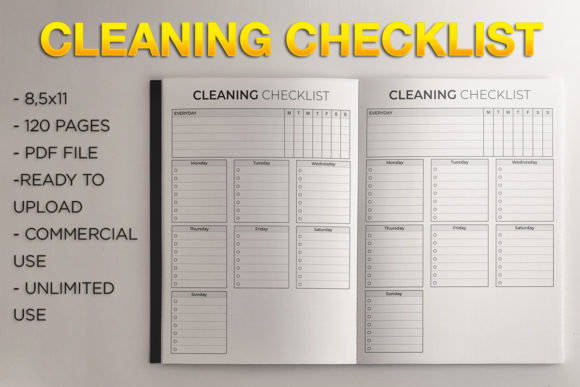
For self-publishers navigating the low-content book market on Amazon, selecting the right interior file is often more critical than designing a cover. The Cleaning Checklist KDP Template represents a specific category of functional interiors designed to solve a recurring problem for end-users while adhering to strict printing specifications. This particular template offers a pre-formatted, 120-page PDF sized at 8.5″ x 11″ with a no-bleed configuration. Understanding the technical and commercial implications of this specific format helps publishers determine if it aligns with their portfolio strategy or if alternative approaches might yield better long-term results.
Technical Specifications and Print Safety
The primary value proposition of this cleaning checklist template lies in its adherence to Amazon’s "no bleed" requirements. In KDP publishing, bleed refers to content that extends to the very edge of the page. While full-bleed designs can look professional, they carry significant risks during the upload and approval process. Margins are frequently flagged by automated bots if content drifts even a fraction of an inch outside the safe zone.
This template eliminates that friction point entirely. By utilizing a no-bleed design within the standard 8.5″ x 11″ trim size, the layout ensures all text, checkboxes, and decorative elements remain safely within the printable area. For publishers who have previously faced rejection due to margin errors, this specification provides a reliable baseline. However, this safety comes with a tradeoff: the visual aesthetic is inherently more conservative. Publishers aiming for a high-end, magazine-style layout where graphics touch the page edge will find this template limiting. It is best suited for utility-focused books where clarity and function take precedence over artistic expression.
Page Count Considerations
The 120-page count is a strategic middle ground in the low-content space. Books with fewer than 70 pages often feel insubstantial to buyers browsing physical copies, leading to higher return rates or negative reviews regarding value. Conversely, cleaning journals exceeding 200 pages can become unwieldy for daily use and increase printing costs, which compresses royalty margins. At 120 pages, this template supports approximately three to four months of weekly tracking or a comprehensive room-by-room deep cleaning guide without inflating the production cost. When evaluating this against thinner 50-page alternatives, consider whether your target audience views the book as a disposable tracker or a semi-permanent household reference.
Comparing Pre-Made Templates vs. Custom Interiors
A common decision point for KDP creators is whether to purchase a ready-made PDF like this cleaning checklist template or to design a custom interior using tools like Canva, Affinity Publisher, or Adobe InDesign. Each path has distinct advantages depending on the publisher's resources and goals.
- Speed to Market: A pre-formatted PDF allows for immediate upload. If you are testing a new niche keyword or capitalizing on a seasonal trend like spring cleaning, this template reduces production time from days to minutes. Custom design requires drafting, proofing, and formatting, which delays launch.
- Uniqueness and Branding: Custom interiors allow for unique branding, proprietary layouts, and specific content that differentiates your book from others using the same stock templates. If multiple sellers use this exact 120-page cleaning checklist, the only differentiator becomes the cover and metadata. Custom designs build long-term asset value and reduce direct competition.
- Cost Efficiency: Purchasing a single template is significantly cheaper than hiring a designer or subscribing to premium software suites. For beginners validating a niche, this lowers the barrier to entry. However, established publishers with existing design workflows may find the per-unit cost of templates less economical over time compared to creating reusable master files.
The choice ultimately depends on your business stage. New publishers or those diversifying quickly benefit from the instant utility of this template. Established brands focusing on customer loyalty and review quality typically need the differentiation that custom interiors provide.
Functional Fit: Who Is This Template For?
Not all cleaning books serve the same purpose. This specific 8.5″ x 11″ no-bleed format excels in certain contexts but falls short in others. Evaluating fit prevents misalignment between product and audience expectations.
Ideal Use Cases
This template is particularly effective for general household maintenance logs, rental property turnover checklists, and decluttering trackers. The standard letter size provides ample writing space for users to note specific tasks, products used, or issues found. The no-bleed layout also makes it suitable for home printing; customers who wish to print individual pages for immediate use can do so without worrying about cutting off content near the edges. This dual-use capability (KDP book + printable resource) adds perceived value for practical buyers.
Limitations and Mismatches
If your target audience requires portability, such as professional cleaners carrying a logbook between job sites, the 8.5″ x 11″ size may be too cumbersome. Smaller trim sizes like 6″ x 9″ are generally preferred for mobile professionals. Additionally, if your content relies heavily on photographic guides or colored illustrations, a no-bleed black-and-white interior will not meet user expectations. This template assumes a text-and-line-art approach typical of functional journals rather than instructional manuals.
Evaluating Quality Beyond the File Format
When comparing this cleaning checklist template to other options in the marketplace, look beyond the basic specifications. Several qualitative factors determine whether a template translates into a successful book.
Layout Hierarchy: Effective cleaning checklists guide the eye logically. Does the template group tasks by room, frequency, or priority? A flat list of 100 items is less usable than categorized sections with clear headers. Evaluate the preview to ensure the structure matches how people actually clean, rather than just filling space.
Writing Space Adequacy: Many low-content templates fail because lines are too close together or checkboxes are too small for comfortable handwriting. Since this is a no-bleed design, verify that the safe margins don’t result in cramped content areas. User reviews for similar books frequently cite "not enough room to write" as a primary complaint. Ensure this template allocates sufficient white space for real-world use.
Paper Opacity Awareness: KDP standard paper is relatively thin (55# / 90 GSM). Even with no-bleed designs, heavy ink coverage or double-sided printing can cause ghosting. Assess whether this template uses single-sided layouts or light line weights that minimize bleed-through. If the template prints on both sides with dense graphics, users may find the book frustrating regardless of its organizational merits.
Strategic Integration Into Your Catalog
Treating this cleaning checklist template as a standalone product limits its potential. Successful low-content publishers integrate functional templates into broader content strategies. Consider how this 120-page PDF complements other offerings in your catalog.
For example, if you publish home organization guides or minimalist living journals, this cleaning checklist serves as a natural companion product. Cross-linking between related titles in your author bio or back matter creates an ecosystem rather than isolated listings. Alternatively, use this template as a lead magnet or bonus content for email list building, offering the PDF directly to subscribers while selling the physical book on Amazon.
Also consider seasonal timing. Cleaning books experience demand spikes in January (New Year resolutions) and March-April (spring cleaning). Having a ready-to-upload template allows you to capitalize on these windows without rushing custom design work. However, avoid uploading identical interiors across multiple accounts or under multiple pen names solely to capture keywords. Amazon’s algorithms increasingly penalize duplicate content. Instead, pair this template with unique covers, differentiated titles, and tailored descriptions that speak to specific sub-niches like "post-renovation cleanup," "ADHD-friendly cleaning routines," or "vacation rental management."
Making the Final Decision
The Cleaning Checklist KDP Template in 8.5″ x 11″ no-bleed format offers a pragmatic solution for publishers prioritizing speed, print safety, and functional utility. Its strengths lie in technical compliance and adequate page count for household applications. Its limitations include reduced design flexibility and potential saturation in generic niches.
Before purchasing, honestly assess your current needs. If you require a fast, compliant foundation for testing cleaning-related keywords or expanding a home management series, this template delivers reliable value. If you aim to build a premium brand with distinctive visuals or serve a mobile professional audience, investing in custom design or alternative trim sizes may prove more sustainable. There is no universally superior option—only the option that best aligns with your specific publishing objectives, audience expectations, and resource constraints. Evaluate based on fit rather than features alone, and let user intent guide your selection process.