Evaluating the Coupon Tracker KDP Template for Low Content Publishing
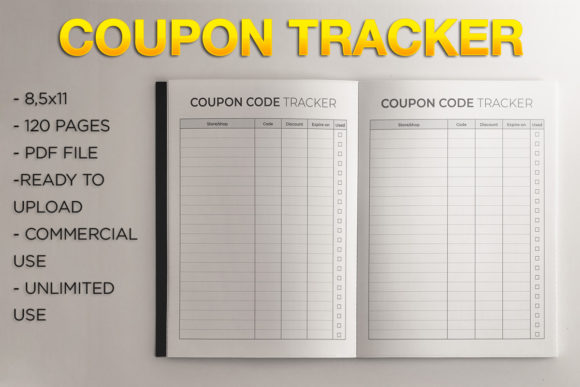
The Coupon Tracker KDP Template is a specialized digital asset designed for self-publishers operating within the Amazon Kindle Direct Publishing ecosystem. Specifically formatted as an 8.5" x 11" PDF with a no-bleed design, this template serves as the foundational interior file for creating low-content or no-content books. Unlike high-content manuscripts that require extensive writing and editing, this resource targets creators looking to publish functional utility books, such as coupon organizers, savings logs, or budget trackers. Understanding the specific attributes of this template is essential for publishers assessing whether it aligns with their current portfolio strategy and quality standards.
Defining the Product Specifications
Before integrating this asset into a publishing workflow, it is necessary to understand its technical parameters. The Coupon Tracker KDP Template is delivered as a single PDF file containing 120 pages. This page count is significant because it sits comfortably above Amazon’s minimum threshold for spine text eligibility, which typically requires at least 79 pages for paperback books. A 120-page interior allows for a professional appearance on bookshelves while providing sufficient volume for end-users to track savings over several months.
The "no bleed" designation is a critical technical specification. In printing terminology, bleed refers to artwork or background colors that extend beyond the trim edge of the page. A no-bleed design keeps all content, including borders, lines, and text, safely within the margins. This format reduces the risk of trimming errors during the manufacturing process and simplifies the cover creation phase, as the cover dimensions do not need to account for extra wrap-around space. For publishers who are new to KDP or prefer a streamlined production process, the no-bleed constraint offers a layer of technical safety.
Strategic Value for Low Content Publishers
Publishers evaluate templates like this based on time efficiency and market fit. The primary value proposition of the Coupon Tracker KDP Template is the reduction of pre-production labor. Designing a 120-page interior from scratch using software like Adobe InDesign or Canva requires significant time investment to ensure consistent margins, alignment, and gutter spacing. By utilizing a pre-formatted template, creators can bypass the layout phase and focus entirely on keyword research, niche validation, and cover design.
Furthermore, the coupon tracking niche addresses a perennial consumer need. Despite the rise of digital coupon apps, a segment of consumers continues to prefer physical organization methods for extreme couponing, household budgeting, or small business expense tracking. This template provides a structured solution for that demographic. For publishers, this represents an opportunity to diversify beyond saturated niches like journals or planners. The specificity of "coupon tracking" often correlates with lower competition compared to generic notebooks, potentially offering better visibility in search results.
Benefits and Practical Advantages
Beyond time savings, this template offers structural consistency. Maintaining uniform margins across 120 pages manually is prone to human error. A professionally prepared template ensures that the binding gutter—the inner margin where the pages meet—is correctly sized for the page count. Insufficient gutter space is a common cause of negative reviews in low-content books, as users struggle to write near the spine. This template accounts for standard KDP binding requirements, mitigating the risk of usability complaints.
The instant download nature of the product also facilitates rapid testing. In the low-content publishing model, success often depends on testing multiple variations to identify winning concepts. Because the interior is ready for immediate upload, publishers can launch test titles quickly to gauge market demand without sunk costs in design. If a particular cover style or keyword combination performs well, the publisher can then invest more resources into custom interiors or expanded editions.
Considerations and Tradeoffs
While the Coupon Tracker KDP Template offers efficiency, publishers must weigh these benefits against inherent limitations. The most significant tradeoff is exclusivity. As a commercially available template, other publishers may have access to the identical interior file. Amazon’s algorithms prioritize unique content; if dozens of books share the exact same interior, they may be flagged as duplicate content or struggle to rank competitively. Publishers relying solely on this template without modification risk blending into a sea of identical products.
Additionally, the fixed 8.5" x 11" size may not suit all user preferences. While this dimension is standard for home organizers, some coupon enthusiasts prefer smaller, portable sizes like 6" x 9" for use in retail environments. Publishers targeting mobile users may find this specific template misaligned with their audience's needs. The no-bleed design, while safer for printing, also limits aesthetic possibilities. Full-page backgrounds or edge-to-edge graphics are not possible, which can result in a plainer visual presentation compared to bleed-enabled competitors.
Evaluating Fit: When to Use This Template
This template is likely a strong fit for publishers in specific scenarios. It is ideal for beginners learning the KDP upload process, as the no-bleed format minimizes technical rejection risks. It is also suitable for established publishers looking to fill gaps in a broader financial or organizational series. For example, if a creator already sells budget planners and debt payoff logs, adding a coupon tracker completes the ecosystem without requiring a new design workflow.
The template is also appropriate for seasonal opportunities. Coupon usage often spikes during holiday seasons or back-to-school periods. The speed of deployment allows publishers to capitalize on these trends faster than if they were designing custom interiors. However, it is less suitable for publishers aiming to build a premium brand identity based on proprietary designs. Those seeking to charge higher price points or establish long-term intellectual property assets should view this template as a starting point rather than a final product.
Alternatives and Decision Framework
Publishers should consider alternatives if their goal is high differentiation. Custom design remains the gold standard for avoiding duplicate content issues. Hiring a freelancer or investing time in learning design software yields unique interiors that cannot be replicated by competitors. Another alternative is modifying existing templates. Many publishers purchase base templates and alter fonts, headers, and layout structures to create derivative works that satisfy uniqueness requirements while retaining the efficiency of pre-set margins.
When deciding whether to acquire this Coupon Tracker KDP Template, evaluate your current bottleneck. If design time is preventing you from publishing validated niches, this template solves a logistical problem. If your bottleneck is sales or traffic, a new template will not resolve the issue; marketing and keyword optimization will. Assess the competitive landscape for "coupon tracker" keywords before purchasing. If the top ten results all appear to use similar stock interiors, entering the market with the same template may yield diminishing returns. Conversely, if current offerings are outdated or poorly reviewed, a clean, well-formatted template could capture market share through superior presentation.
Ultimately, the Coupon Tracker KDP Template is a tool for efficiency within a specific technical framework. Its 8.5" x 11" no-bleed configuration and 120-page length make it compliant and functional for Amazon’s platform. Success depends less on the template itself and more on how the publisher leverages it within a broader strategy of niche selection, cover differentiation, and market analysis. By understanding both the capabilities and constraints of this asset, creators can make informed decisions about its role in their publishing business.